
The drug that broke the field open and then broke. ACE-031 (later renamed ramatercept) was the first ActRIIB-Fc fusion protein to reach human trials in Duchenne muscular dystrophy, and the same mechanism that produced 3% lean-mass gains in healthy adults caused enough nosebleeds and spider veins to stop Phase 2 in its tracks.
Most pages selling "ACE-031" online today are not selling the biologic Acceleron ran in trials. They are selling something else.
ACE-031 quick stats
- Target: Myostatin, activin A, activin B, and GDF-11 via an ActRIIB-Fc decoy receptor
- Sponsor: Acceleron Pharma (later renamed ramatercept)
- Route in trials: Subcutaneous, every 2 to 4 weeks
- Phase 2 doses: 1 mg/kg escalating to 3 mg/kg in Duchenne boys
- Indication studied: Duchenne muscular dystrophy (NCT01099761)
- Status: Discontinued in 2013, never approved by any regulator
Key takeaways
- ACE-031 was a soluble ActRIIB-Fc fusion that trapped myostatin and several related ligands before they could bind their muscle-cell receptors.
- Phase 1 in healthy postmenopausal women produced about 3.3% lean-mass and 5.1% quadriceps-volume gains in 29 days from a single 250 mg subcutaneous dose.
- Phase 2 in Duchenne boys was halted at 12 weeks because of dose-dependent nosebleeds, gum bleeding, and telangiectasia from off-target binding to BMP9 and BMP10.
- Acceleron renamed the molecule ramatercept and shelved it; the company later refocused on sotatercept (Winrevair) for pulmonary arterial hypertension.
- The "ACE-031" sold by peptide vendors today is reconstituted lyophilized material of unknown identity, purity, and Fc fusion fidelity, not the Acceleron biologic.
What ACE-031 actually was
It was not a peptide. ACE-031 is a recombinant fusion protein built from the extracellular domain of activin receptor type IIB (ActRIIB) attached to a human IgG1 Fc tail.
The structure mattered. The ActRIIB extracellular domain is the docking site that mature myostatin uses to start its signaling cascade. By turning that domain into a free-floating decoy, Acceleron created something that could mop up myostatin before it ever reached a muscle cell.
The Fc fusion gave it a roughly 10 to 15 day half-life, long enough to dose every two to four weeks instead of daily.
That design also picked up several other ligands: activin A, activin B, GDF-11, and critically BMP-9 and BMP-10. The breadth of binding was a feature for muscle and a problem for blood vessels.
How the mechanism worked
The brake had to be lifted. Myostatin (GDF-8) is the body's natural ceiling on muscle growth, and ActRIIB is the receptor it uses to send the "stop growing" signal.
If you take ActRIIB out of the cell membrane and put it in the bloodstream as a soluble trap, myostatin binds it harmlessly and never reaches the muscle.
In animal work, blocking that pathway produced extreme muscle hypertrophy, the same phenomenon seen in the Belgian Blue cattle and in myostatin-null human cases. The whole field was built on this observation.
For the broader pathway explainer, see myostatin protein and the anti-myostatin antibody category page.
Phase 1 results that started the hype
The first human dose was striking. In Phase 1, a single 250 mg subcutaneous injection of ACE-031 in postmenopausal women produced about a 3.3% increase in lean body mass and a 5.1% increase in quadriceps muscle volume by day 29, with no resistance training involved.
Lumbar spine bone density rose roughly 3.4% in the same window. Total body fat dropped modestly.
That changed the conversation. A single injection delivering measurable muscle gain in under a month was the cleanest validation the myostatin pathway had ever received in humans.
Bodybuilding forums noticed immediately, which is why "ACE-031" became a household name in peptide circles years before the clinical trial finished.
Phase 2 in Duchenne muscular dystrophy
The next study had higher stakes. NCT01099761 was a Phase 2 trial in boys with Duchenne muscular dystrophy, randomized to ACE-031 1 mg/kg, ACE-031 3 mg/kg, or placebo, dosed by subcutaneous injection every 2 to 4 weeks.
The early signal was real. Lean mass gains of roughly 3 to 5 percent over placebo and thigh muscle volume gains of about 3.1 percent were emerging within the first 12 weeks.
Then the bleeding started.
Patients began reporting nosebleeds, gum bleeding from minor brushing, and spider-vein-like dilated capillaries on the skin. The pattern looked exactly like hereditary hemorrhagic telangiectasia (HHT), a genetic disease caused by mutations in the same BMP signaling pathway.
Acceleron halted the trial in 2011 before the primary functional endpoint, citing the bleeding events. The Independent Data Monitoring Committee could not rule out worsening with continued exposure, and Duchenne boys were the wrong population to take that risk in.
Why the side effects happened
The mechanism was the problem. ActRIIB-Fc traps multiple ligands, not just myostatin. Two of those ligands, BMP-9 and BMP-10, are critical for keeping the endothelial lining of small blood vessels intact.
When ACE-031 sequestered BMP-9 and BMP-10, the vascular endothelium destabilized in the same way it does in genetic HHT.
| Side effect | Rate in Phase 2 | Why it happened |
|---|---|---|
| Epistaxis (nosebleeds) | 10 to 30% | BMP-9/10 trapping disrupts capillary maintenance |
| Gum bleeding | Common | Same mechanism in oral mucosal capillaries |
| Telangiectasia | Dose-dependent | Endothelial dilation in skin and mucosa |
| FSH suppression | Documented in women | Activin B cross-binding |
There was no dose that delivered the muscle gains without the bleeding. The trap was promiscuous by design, and the design could not be undone without rebuilding the molecule.
The ramatercept rename
The drug got a new name and stayed on the shelf. After Acceleron paused the program, ACE-031 was renamed ramatercept under standard INN naming conventions for fusion proteins ending in -cept.
The rename was administrative, not a relaunch. Acceleron did not resume Duchenne trials, did not pursue other muscle-wasting conditions, and shifted resources toward two sister molecules built on the same fusion-trap concept but with different receptor domains: sotatercept (ActRIIA-Fc) and luspatercept (a chimeric ActRIIB-Fc with selective ligand binding).
Sotatercept eventually became Winrevair, an FDA-approved drug for pulmonary arterial hypertension. Luspatercept became Reblozyl for anemia in beta-thalassemia and MDS. Ramatercept itself was never revived for muscle.
Acceleron was acquired by Merck in 2021. The pipeline did not include a ramatercept restart.
What came next in the myostatin field
The graveyard reshaped the science. Every later myostatin program was designed to avoid the ACE-031 problem.
| Drug | Target | What changed from ACE-031 |
|---|---|---|
| Apitegromab | Latent (proform) myostatin only | Spares activin A, BMP9, BMP10, TGF-β1 |
| Bimagrumab | ActRIIA/B antibody, not a trap | Different epitope, less BMP cross-binding |
| Stamulumab (MYO-029) | Mature myostatin antibody | Withdrawn early in muscular dystrophy |
| Taldefgrobep alfa | Active myostatin + ActRIIB | Phase 3 in SMA missed endpoint in 2024 |
| Trevogrumab | Active myostatin antibody | Re-emerged in obesity programs |
Apitegromab is the clearest answer to ACE-031: hit the part of the pathway upstream of activation, leave BMP signaling alone. SAPPHIRE Phase 3 in SMA confirmed the safety advantage.
Why "ACE-031" sold online is not the real drug
This is the part that matters for buyers. Acceleron's ACE-031 was a 600+ amino acid IgG1 Fc fusion protein produced in CHO cells under cGMP, with strict purity and glycosylation specs. The clinical-grade material cost roughly $80 to $150 per milligram when manufactured at trial scale.
The "ACE-031" sold in peptide vials online is something else. Common problems:
- Lyophilized powder of unverified identity, often a short fragment or a degraded form
- No Fc fusion at all, which means no half-life extension and no real receptor mimicry
- No CHO-derived glycosylation, which affects function and immunogenicity
- No third-party potency assay, only generic mass-spec or purity certificates
- Prices that do not match what a real ActRIIB-Fc fusion costs to make
What gets injected is unknown protein material. Even if the powder is the right sequence, the absence of correct folding, glycosylation, and Fc structure means it is not the molecule Acceleron tested.
The honest framing: there is no legitimate ACE-031 supply chain. The drug never received approval, was never licensed, and is not in clinical pipelines.
If a vendor uses the trial-stage muscle gain numbers to sell a vial, that vendor is conflating Acceleron's clinical-grade biologic with their own unverified product. For the broader supplement and peptide landscape, see myostatin inhibitor peptide.
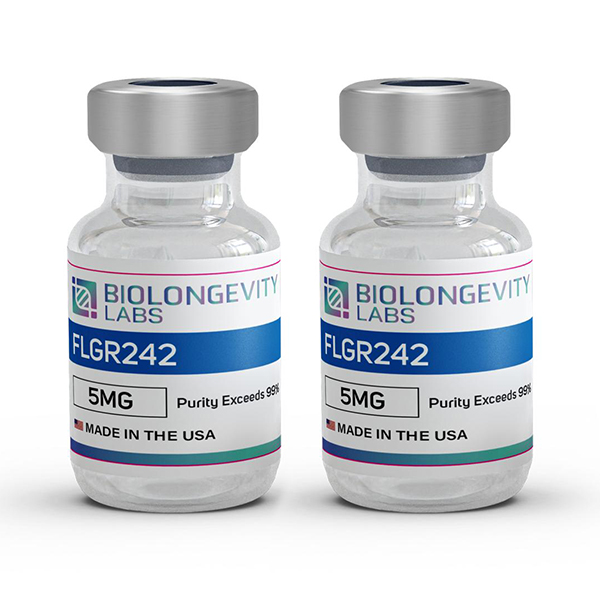
Doses in trials versus what is sold
The numbers do not match. Acceleron's Phase 2 dosing in Duchenne was 1 to 3 mg/kg subcutaneous every 2 to 4 weeks. For a 70 kg adult, that is 70 to 210 mg per injection.
Peptide vendors typically sell 1 mg vials and describe dosing as "100 to 500 mcg" once or twice weekly. That is one to two orders of magnitude below what Acceleron used clinically, which means even if the material were authentic, the dose would not reproduce trial-level exposure.
| Setting | Dose | Frequency | Practical cost |
|---|---|---|---|
| Phase 1 (healthy women) | 250 mg | Single SC injection | Trial-only |
| Phase 2 (DMD boys) | 1 to 3 mg/kg | Every 2 to 4 weeks SC | Trial-only |
| Peptide vendor "ACE-031" | 100 to 500 mcg | Once or twice weekly | $30 to $80 per 1 mg vial |
The dosing mismatch is a tell. Real ActRIIB-Fc fusion protein is dosed in milligrams per kilogram, not micrograms per injection.
What the failure taught the field
It rewrote the design rules. After ACE-031, every serious muscle drug had to answer two questions: how does it avoid BMP-9 and BMP-10 cross-binding, and how selective is the myostatin engagement?
That is why apitegromab targets only the latent precursor. It is why bimagrumab moved away from a free trap into a receptor antibody. It is why the field's interest in pure activin A blockers (see garetosmab) eventually circled back to specific indications like FOP rather than muscle wasting.
The lesson was not "stop blocking myostatin." It was "stop blocking everything else along with it."
Sources and notes
- Peptide Database ACE-031 overview
- Phase 2 ACE-031 in DMD, Neurology supplement
- ClinicalTrials.gov NCT01099761
- Peptide Authority ACE-031 profile
- PeptideDeck ACE-031 (ramatercept) page
- BiotechPeptides ACE-031 research summary
- Exploring Peptides ACE-031/ramatercept profile
Frequently Asked Questions
Is ACE-031 the same as ramatercept?
Yes. ACE-031 was the Acceleron development code. Ramatercept is the INN name assigned during the program. Both refer to the same ActRIIB-Fc fusion protein that was halted in Phase 2 for Duchenne muscular dystrophy.
Why was the ACE-031 trial stopped?
Patients in Phase 2 developed nosebleeds, gum bleeding, and telangiectasia caused by off-target binding to BMP-9 and BMP-10. The bleeding pattern matched hereditary hemorrhagic telangiectasia, and no dose adjustment could separate the muscle effect from the vascular effect.
Is ACE-031 approved anywhere?
No. ACE-031 has not received FDA, EMA, or any other regulatory approval. Acceleron discontinued the program in 2013, and the molecule has not been revived for any indication.
Can you buy real ACE-031 online?
No legitimate supply chain exists. Vials sold as "ACE-031" by peptide vendors are unverified material that does not match the IgG1 Fc fusion protein Acceleron produced under cGMP. Identity, glycosylation, and potency are unverified.
What replaced ACE-031 in the myostatin field?
Apitegromab from Scholar Rock targets only latent myostatin and spares BMP signaling, which is why it avoided the bleeding seen with ACE-031. Bimagrumab took a different antibody route. Sotatercept (the ActRIIA cousin) became Winrevair for pulmonary arterial hypertension.
Did ACE-031 cause muscle gain in people?
Yes, briefly. A single 250 mg subcutaneous dose in postmenopausal women produced about 3.3% lean-mass and 5.1% quadriceps-volume gains in 29 days. Duchenne patients showed 3 to 5% lean-mass gains over placebo before the trial was halted at week 12.
This article is educational and is not medical advice. ACE-031 (ramatercept) is a discontinued investigational biologic that is not approved, licensed, or available through any legitimate medical channel. Material sold online under that name is unverified and carries unknown identity, purity, and safety risks. Anyone considering muscle-related medical therapy should work with a qualified clinician and stay inside approved or actively recruiting clinical trials.