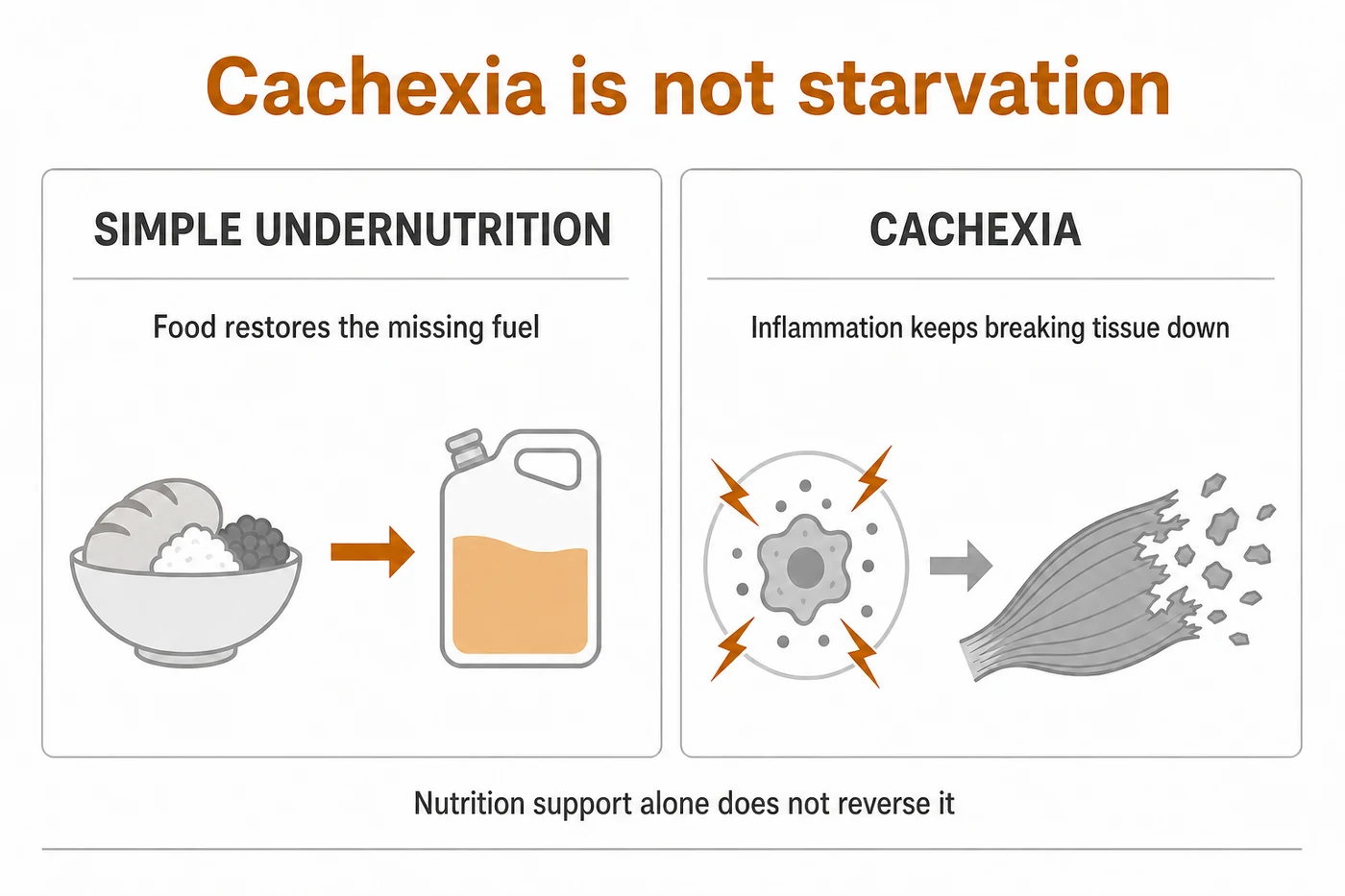
Cachexia is the severe loss of muscle and body weight that a serious illness causes, and what separates it from ordinary weight loss is that food does not fix it. Someone with cachexia can be eating what is put in front of them and still be visibly disappearing week by week, which is usually the point at which a family goes looking for the word.
Key takeaways
- Cachexia is wasting driven by an underlying illness and the body's response to it. Its defining feature, written into the consensus definitions, is that conventional nutritional support does not fully reverse it.
- It is most common in advanced cancer, where Cancer Research UK puts it at up to 8 out of 10 people. It also occurs in heart failure, COPD, chronic kidney disease and HIV/AIDS.
- The usual picture is unintentional weight loss, visibly thinning muscle, appetite loss and early fullness, and weakness out of proportion to what the person is doing.
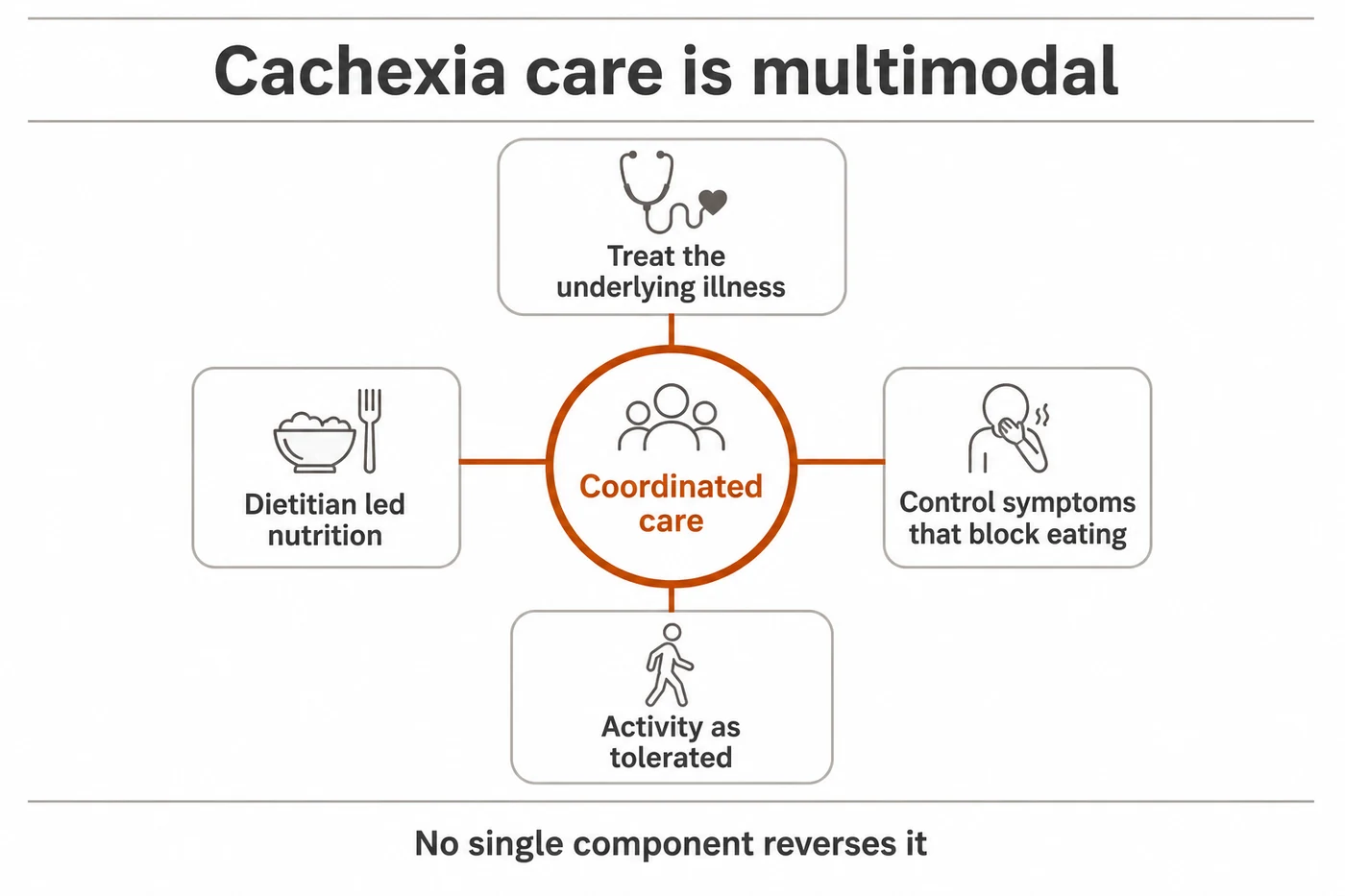
- No drug reverses cachexia. Care combines treating the underlying illness, controlling the symptoms that block eating, dietitian-led nutrition, activity where tolerated, and medicines aimed at appetite and weight.
- The myostatin and activin drugs tested in cachexia did not succeed, and those programmes moved to other diseases. Nothing in that class is in a cachexia trial today.
What cachexia is
Cachexia is not starvation, and that is the most useful thing to understand about it. In simple undernutrition the body is short of fuel and responds when fuel arrives. In cachexia the illness has changed how the body handles fuel: muscle protein is broken down faster than it is rebuilt, inflammation suppresses appetite, and insulin resistance blunts the response to a meal. The National Cancer Institute describes cancer cachexia as a wasting syndrome that leads to weakness, fatigue and loss of skeletal muscle and fat, and states directly that it cannot be reversed with nutrition support alone.
Muscle is the part that always goes. Fat may be lost alongside it or largely preserved, so a normal-looking body weight is not reassurance, and fluid retention can hold the scale steady while lean tissue disappears underneath. Both consensus statements specify weight loss corrected for fluid for that reason. The formal wording and thresholds are in our guide to the cachexia definition and consensus criteria.
Cachexia symptoms and what they look like day to day
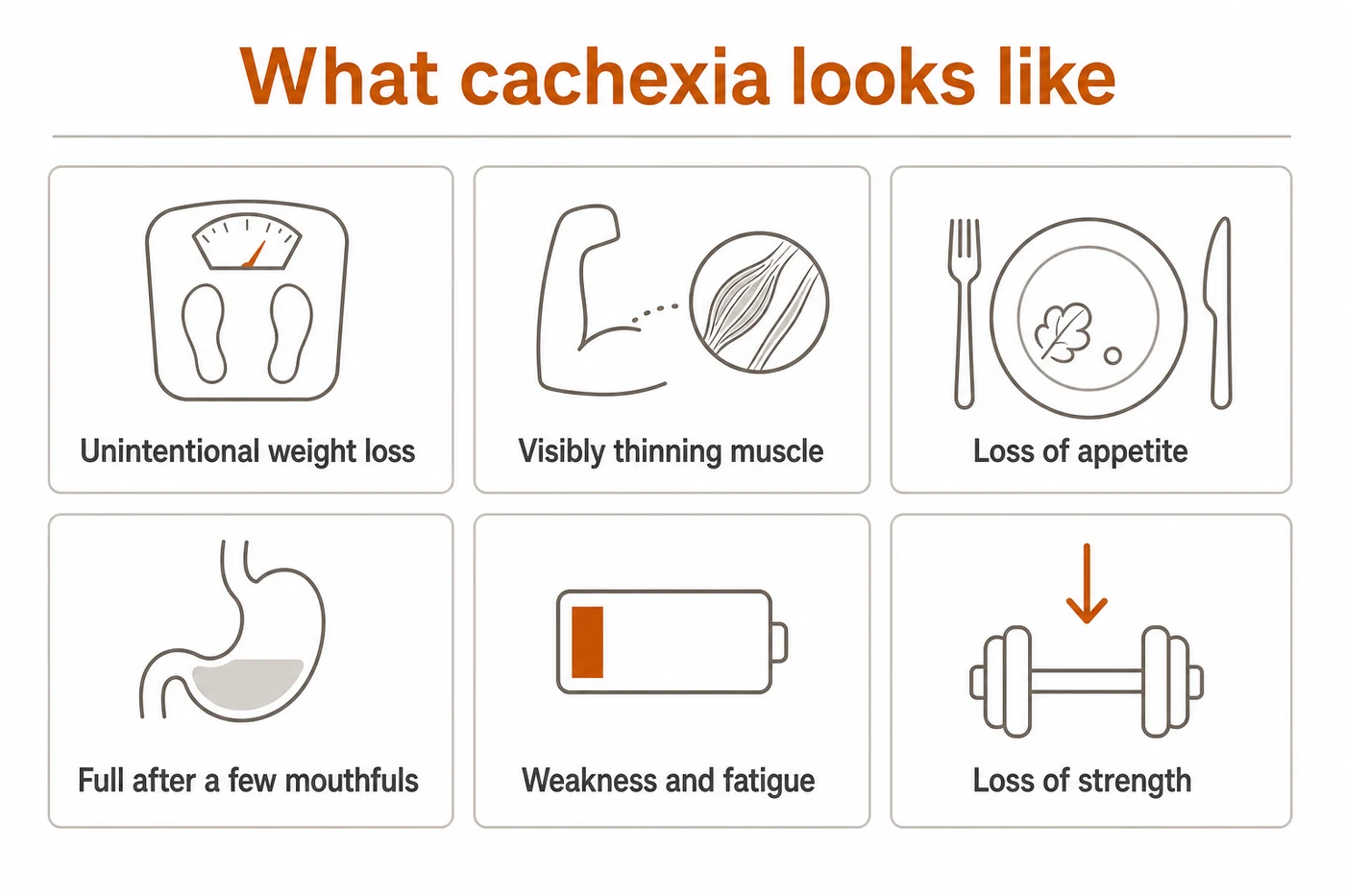
Unintentional weight loss. Rings turn on the finger, watch straps move a notch, waistbands need a belt. The face often shows it first, at the temples and above the collarbones, then the shoulders and thighs.
Appetite loss and early fullness. Both the NCI and Cancer Research UK list appetite loss among the core features. In practice it is less about hunger than capacity: half a plate feels like too much, and taste can change during cancer treatment.
Fatigue and weakness. Weakness out of proportion to activity: stairs, standing from a low chair, carrying shopping, holding arms up to wash hair. Cancer Research UK also lists anaemia, which compounds the tiredness. Loss of function is part of the syndrome rather than a side issue, and the international cancer framework counts functional and psychosocial impairment among the domains a team should assess.
Mealtimes often turn into a negotiation as this progresses, and whoever is cooking starts to feel they are failing. They are not. The biology is what stopped the food working.
What causes cachexia, and which illnesses it comes with
The NCI groups the mechanisms into four: inflammation, which suppresses appetite and drives loss of muscle and fat; rapid breakdown of the body's protein and fat stores; insulin resistance, which stops glucose being used normally; and a hormonal imbalance in which catabolic signals outweigh anabolic ones. Intake usually falls at the same time, because of nausea, mouth soreness, pain, low mood or treatment side effects. Less is coming in and more is being taken apart, in the same person, in the same week.
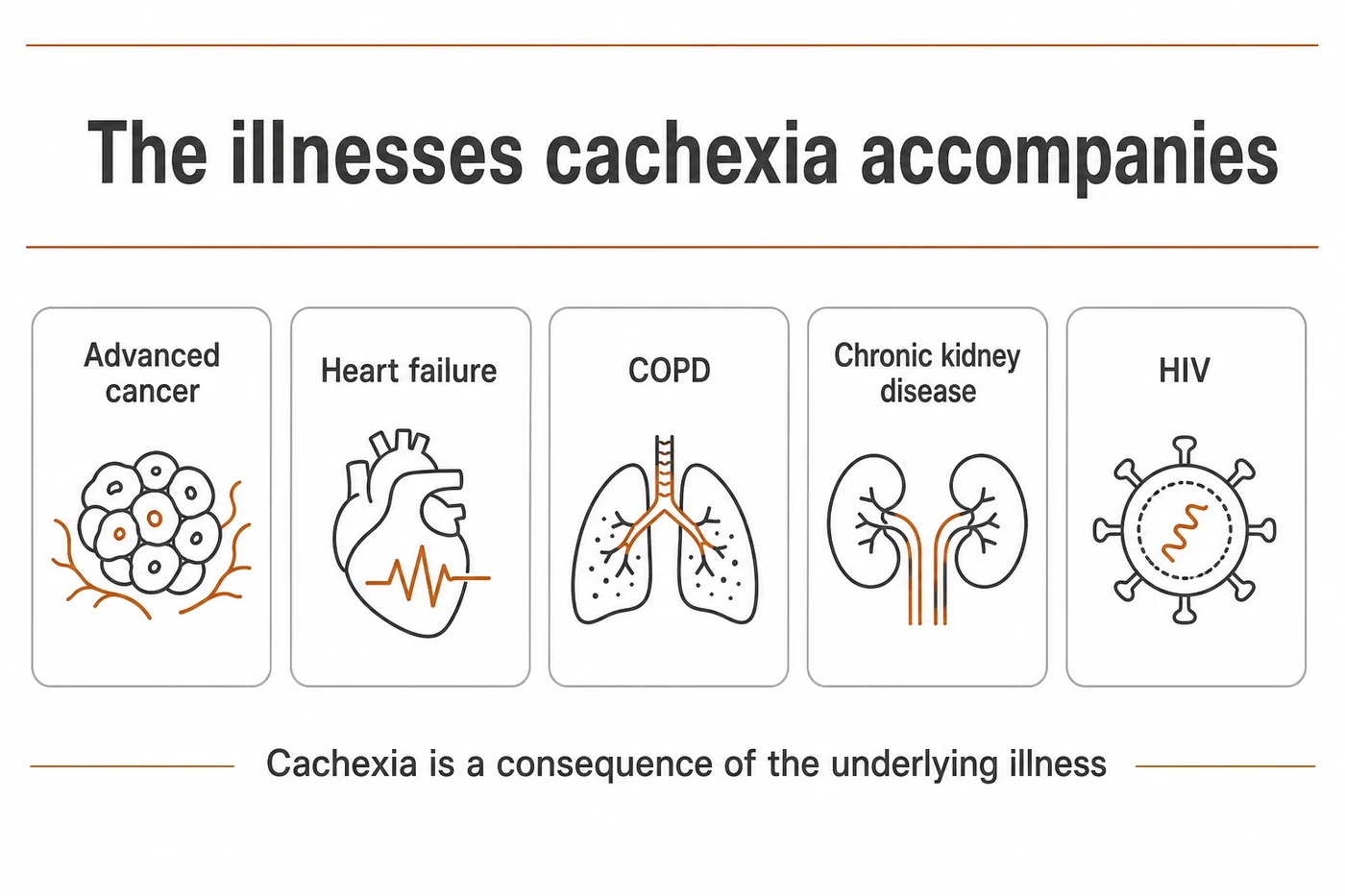
Cancer is where cachexia is most common and most studied. Cancer Research UK reports that up to 8 out of 10 people with advanced cancer develop some degree of it, and that it is more common in lung cancer and in cancers anywhere in the digestive system. MD Anderson reports about 50% to 60% of patients in its Supportive Care Clinic as cachectic, rising to close to 80% in pancreatic, colorectal and lung cancer. Early-stage cancers usually do not cause it.
Chronic heart failure. Wasting here has its own weight-loss threshold and its own outcome data, and fluid retention makes it unusually easy to miss. We cover it in cardiac cachexia.
COPD, chronic kidney disease and HIV/AIDS. The 2008 consensus panel was assembled across specialties because the same picture appears outside oncology: alongside breathlessness and inactivity in advanced lung disease, as protein-energy wasting in kidney disease, and as a defining feature of advanced untreated HIV infection.
How cachexia is diagnosed
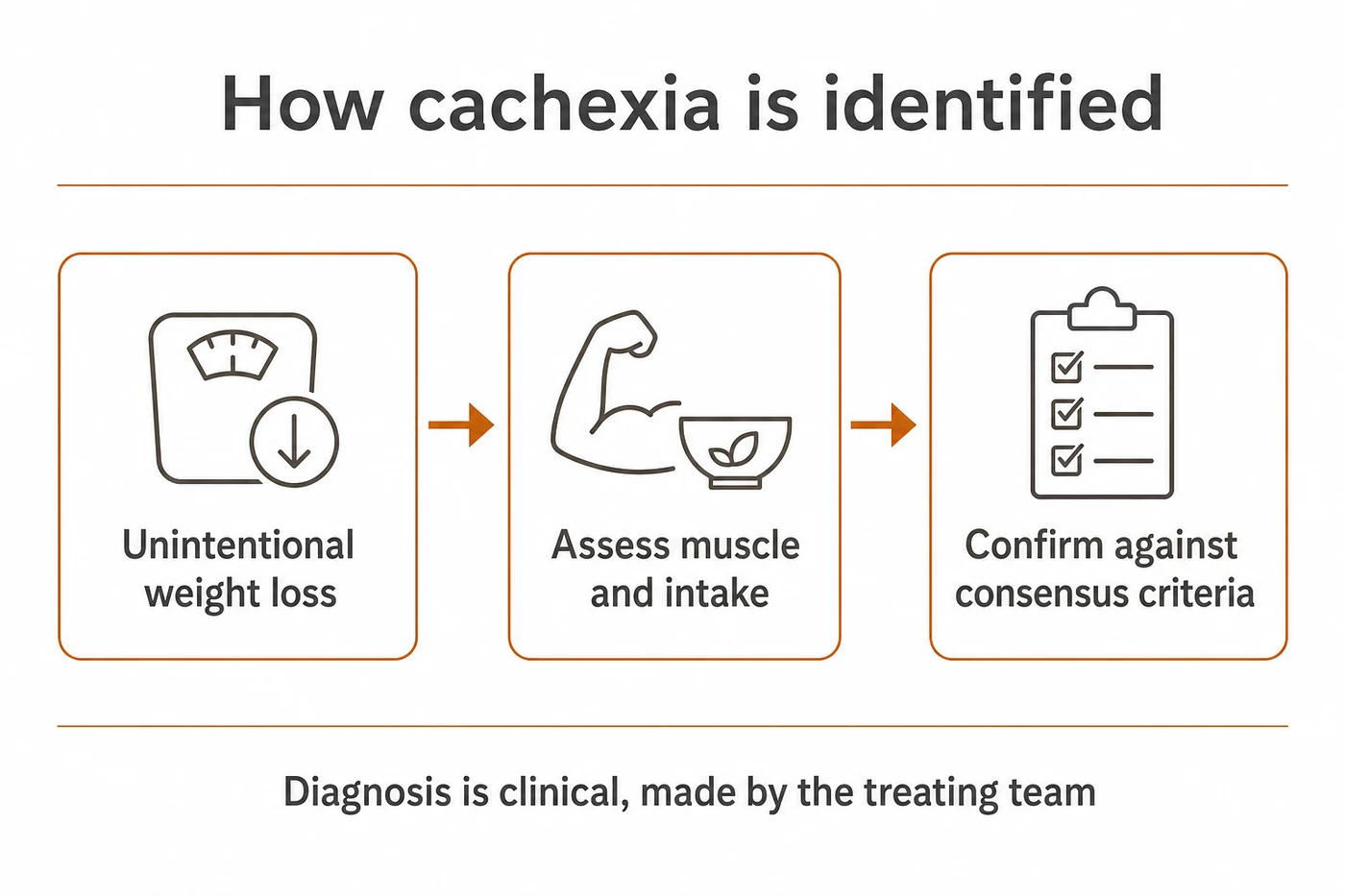
There is no single test. A clinician builds the diagnosis from documented unintentional weight loss over time, corrected for fluid, alongside body mass index, muscle mass and strength, how much a person is eating, and an illness that explains it.
In cancer, the 2011 international consensus set the thresholds most teams use: weight loss above 5%, or above 2% when body mass index is already below 20, or above 2% in someone meeting sarcopenia criteria. The same framework stages the syndrome as precachexia, cachexia and refractory cachexia. MD Anderson advises monitoring weight at least every three months, and body composition can often be read from CT scans already done for staging.
The full criteria and exclusions are in our cachexia definition guide, and we explain the R64 and E88.A codes in our cachexia ICD-10 guide.
Cachexia treatment: what is actually done
No treatment reverses cachexia. That is the honest starting point, and not the end of the sentence, because several things are worth asking a clinical team for.
Treating the underlying illness is the largest single lever. When cancer responds to treatment, or heart failure therapy is optimised, the drive behind the wasting eases.
Controlling the symptoms that block eating. Nausea, pain, constipation, mouth sores, altered taste, breathlessness and low mood all cut intake, and each is treatable. Fixing two of them can do more for a person's week than any appetite drug.
Nutrition, with the right goal. The ASCO cancer cachexia guideline says dietary counselling may be offered and that referral to a registered dietitian is reasonable. The purpose is energy, immune function, tolerating treatment and quality of life, not the rebuilding of lost muscle. A family told otherwise blames itself for something nutrition was never going to do alone.
Activity where it is tolerated. The rationale is strong, because loading muscle is the most direct signal to keep it. The evidence is thinner: a Cochrane review updated in 2021 found four randomised trials in 178 adults and could not determine whether exercise helps or harms in cancer cachexia. Movement is offered as sensible supportive care, supervised where the illness requires it, rather than as proven therapy.
Medicines aimed at appetite and weight. In 2023 ASCO updated its guideline to recommend offering low-dose olanzapine once daily to improve weight gain and appetite, with a short-term trial of a progesterone analogue or a corticosteroid for patients who cannot tolerate it. The ESPEN nutrition guideline is specific about those older options: corticosteroids raise appetite for about two to three weeks before the effect fades, and progestins such as megestrol acetate increase appetite and body weight but not fat-free mass, with a real risk of thromboembolism. Put plainly, these drugs can make someone feel more like eating and can put weight on, but the weight is largely fat and fluid rather than muscle. For many people that is still worth having. It is not the same as reversing the syndrome. Anamorelin, an oral ghrelin receptor agonist, was approved in Japan in January 2021 for cachexia in several cancers, but not by the FDA or the EMA.
What is in trials. The most watched candidate is ponsegromab, an antibody against GDF-15, a cytokine elevated in cancer cachexia. A 12-week phase 2 trial in 187 patients, published in the New England Journal of Medicine in December 2024, found greater weight gain than placebo at all three doses, a median between-group difference of 1.22 kg to 2.81 kg, with better appetite, symptoms and physical activity at the highest dose. It is not approved anywhere and later-stage studies are still running, but it is worth asking an oncology team about.
What the evidence does not support. ASCO states that enteral feeding tubes and parenteral nutrition should not be used routinely, though tube feeding may be right where a blockage physically prevents eating. Raising calories or protein does not close the gap, which is why non-reversal by nutritional support sits inside the definition. And nothing sold online as a supplement or peptide for muscle wasting is an approved treatment or has trial evidence here, so anything a seriously ill person takes should be known to their team.
Prognosis, and what a diagnosis does and does not tell you
Cachexia is an adverse prognostic marker across the illnesses it appears in. In heart failure, the study that established this found wasting predicted mortality independently of standard markers including ejection fraction and exercise capacity. In cancer, the 2011 consensus framework defines the final stage, refractory cachexia, as one in which performance status is low, the disease is not responding to anticancer treatment, and expected survival is less than three months.
Two things need saying alongside that, because families read those sentences at three in the morning. Refractory cachexia is a specific late stage, not the same as being diagnosed with cachexia; the framework has three stages precisely because the earlier ones carry different options. And staging describes groups, not a person. What is driving the wasting, and how treatable that illness is, matters more to an individual outcome than the wasting itself, and prognosis for any patient is a question for the team that knows the case.
Naming refractory cachexia was deliberate. It gives clinicians language for the point at which pushing food stops being a kindness, and it puts responsibility for that on the biology rather than on the family.
Where myostatin and activin A fit
This site covers the myostatin pathway, so it would be easy to end on an encouraging note. The honest version is less comfortable, and anyone who arrived hoping otherwise deserves it straight.
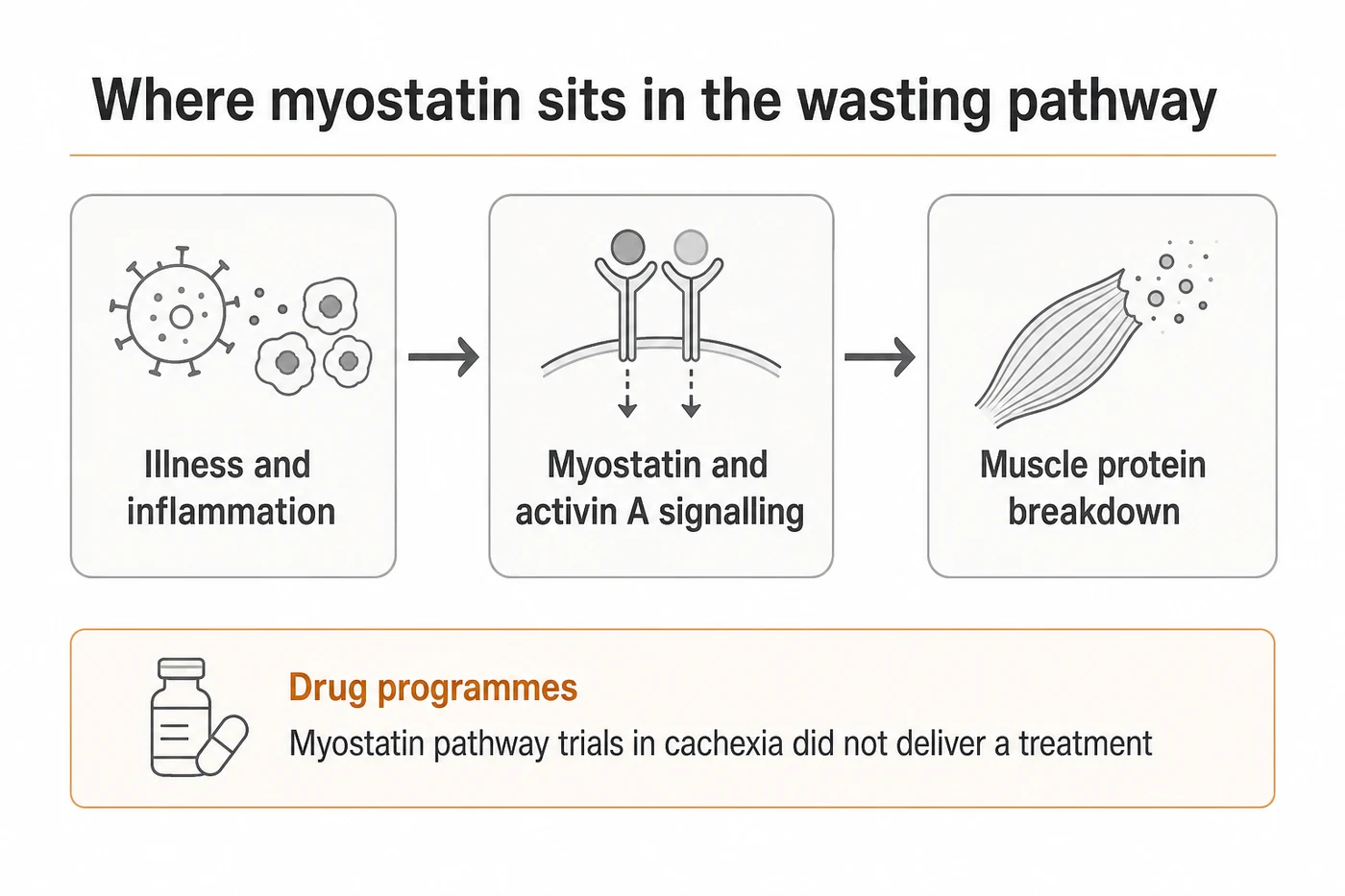
Myostatin, or GDF-8, is a TGF-beta family protein that acts as a brake on skeletal muscle growth. It signals with the related protein activin A through the activin type IIB receptor, and that axis is what drug developers went after in wasting conditions. The idea is clean: if illness is pushing a brake on muscle, release the brake. In tumour-bearing mice it works strikingly well.
In people, the record is this. LY2495655, an antimyostatin antibody, was added to chemotherapy in a randomised phase 2 trial in pancreatic cancer. The 300 mg arm was stopped in August 2014 because of an imbalance in deaths between arms, the 100 mg arm was stopped in January 2015 for futility, and overall survival was not improved. Bimagrumab, an antibody against the activin receptor, ran phase 2 studies in cancer-related weight loss and in COPD cachexia between 2011 and 2014. Both are recorded as completed, and neither produced an approved treatment.
Today there is nothing running. A search of ClinicalTrials.gov in August 2026 for myostatin or activin interventions in cachexia returns studies that are completed, terminated or withdrawn, most starting between roughly 2010 and 2018, and several of the remaining entries are observational studies measuring the two proteins rather than trials of a drug. The drugs went elsewhere: bimagrumab and trevogrumab are in obesity programmes aimed at preserving lean mass during GLP-1 weight loss, and apitegromab is under FDA review for spinal muscular atrophy with a decision date of 30 September 2026. None is in development for cachexia.
So a myostatin drug for cachexia is not close, and fifteen years of attempts have not produced one. The mechanistic detail, including the activin A biomarker data and why circulating myostatin can read low even while the pathway is overactive inside muscle, is in our page on myostatin and cancer cachexia. One warning follows: research peptides sold as follistatin, or advertised as myostatin inhibitors, are not these drugs, have no evidence in cachexia, and no place in the care of someone being treated for cancer or heart failure.
Sources
- Cachexia and Cancer, National Cancer Institute.
- Cachexia, Cancer Research UK.
- Cachexia in cancer patients: what to know, MD Anderson Cancer Center.
- Evans WJ, et al. Cachexia: a new definition. Clinical Nutrition. 2008;27(6):793-799.
- Fearon K, et al. Definition and classification of cancer cachexia. Lancet Oncology. 2011;12(5):489-495.
- Roeland EJ, et al. Management of cancer cachexia: ASCO guideline. Journal of Clinical Oncology. 2020;38(21):2438-2453, and the 2023 rapid recommendation update. 2023;41(28):4178-4179.
- Muscaritoli M, et al. ESPEN practical guideline: clinical nutrition in cancer. Clinical Nutrition. 2021;40(5):2898-2913.
- Grande AJ, et al. Exercise for cancer cachexia in adults. Cochrane Database of Systematic Reviews. 2021;3:CD010804.
- Wakabayashi H, et al. The regulatory approval of anamorelin in Japan. Journal of Cachexia, Sarcopenia and Muscle. 2021;12(1):14-16.
- Groarke JD, et al. Ponsegromab for the treatment of cancer cachexia. New England Journal of Medicine. 2024;391(24):2291-2303.
- Golan T, et al. LY2495655, an antimyostatin antibody, in pancreatic cancer. Journal of Cachexia, Sarcopenia and Muscle. 2018;9(5):871-879.
- NCT01433263 and NCT01669174, bimagrumab in cancer-related weight loss and in COPD cachexia, ClinicalTrials.gov.
Frequently asked questions
What is cachexia in simple terms?
Cachexia is severe loss of muscle and body weight caused by a serious illness and the way the body responds to it. It differs from not eating enough, because the muscle loss continues even when a person eats, and conventional nutritional support does not fully reverse it. It is most common in advanced cancer, and also occurs in heart failure, COPD, chronic kidney disease and HIV/AIDS.
Can cachexia be reversed?
Treating the underlying illness successfully is the most effective thing, because it reduces the drive behind the wasting. Beyond that, no treatment reliably reverses cachexia, and non-reversal by nutritional support is part of how the syndrome is defined. Earlier stages have more options than later ones, which is why the consensus framework separates precachexia, cachexia and refractory cachexia.
Does eating more help someone with cachexia?
Eating well matters for energy, immune function, tolerating treatment and quality of life, and a referral to a registered dietitian is reasonable. What extra food does not do is rebuild lost muscle, because the illness drives protein breakdown and blunts the response to a meal at the same time. Pushing food on someone who cannot manage it usually causes distress without changing the outcome.
Is there a drug for cachexia?
No drug reverses the syndrome. ASCO updated its guideline in 2023 to recommend offering low-dose olanzapine once daily to improve weight gain and appetite, with a short-term trial of a progesterone analogue or a corticosteroid for people who cannot tolerate it. Those drugs improve appetite and add weight, mostly fat and fluid rather than muscle. Anamorelin is approved for cancer cachexia in Japan but not by the FDA or the EMA, and ponsegromab remains investigational.
Is a myostatin inhibitor available for cachexia?
No. Myostatin and activin blockers were tested in cancer and COPD cachexia and did not produce an approved treatment. One antimyostatin antibody trial in pancreatic cancer was stopped early, first for an imbalance in deaths and then for futility, and did not improve survival. As of August 2026 there is no recruiting or active trial of a myostatin-pathway drug in cachexia; that drug class is now being developed for obesity and spinal muscular atrophy.
This article is for educational purposes only and is not medical advice. Cachexia is a clinical diagnosis requiring assessment by a qualified healthcare professional, and unexplained weight loss should always be investigated. Nothing here should be used to start, stop or change any treatment, diet, supplement or exercise plan. Decisions about cachexia care, including any medicine or trial mentioned here, belong with the treating team.