Topic
Conditions
How myostatin drives muscle loss across disease — cachexia, sarcopenia, kidney disease, diabetes, heart failure, Duchenne, and aging.
30 articles
Facioscapulohumeral Muscular Dystrophy: Genetics and Trials
Facioscapulohumeral muscular dystrophy: D4Z4 and DUX4 genetics, ICD-10 code G71.02, and what the myostatin drug trials in FSHD actually showed.
Myotonic Muscular Dystrophy: What Myostatin Data Shows
Myotonic dystrophy (DM1 and DM2) explained: the repeat expansions, the muscle loss pattern, and why no myostatin inhibitor has ever been trialed in it.
Becker Muscular Dystrophy: Myostatin, Follistatin, Trials
Becker muscular dystrophy explained: the reading-frame rule, cardiac risk, and what myostatin and follistatin trials in BMD actually found.
Muscular Dystrophy Symptoms by Type, Age and Pattern
Muscular dystrophy symptoms differ by type. Which muscles weaken first, at what age, and what heart and breathing signs to expect, from clinical sources.
Duchenne Muscular Dystrophy: Causes, Treatment, Outlook
Duchenne muscular dystrophy explained: the DMD gene, symptoms, diagnosis, FDA-approved treatments as of 2026, and why myostatin drugs keep failing here.
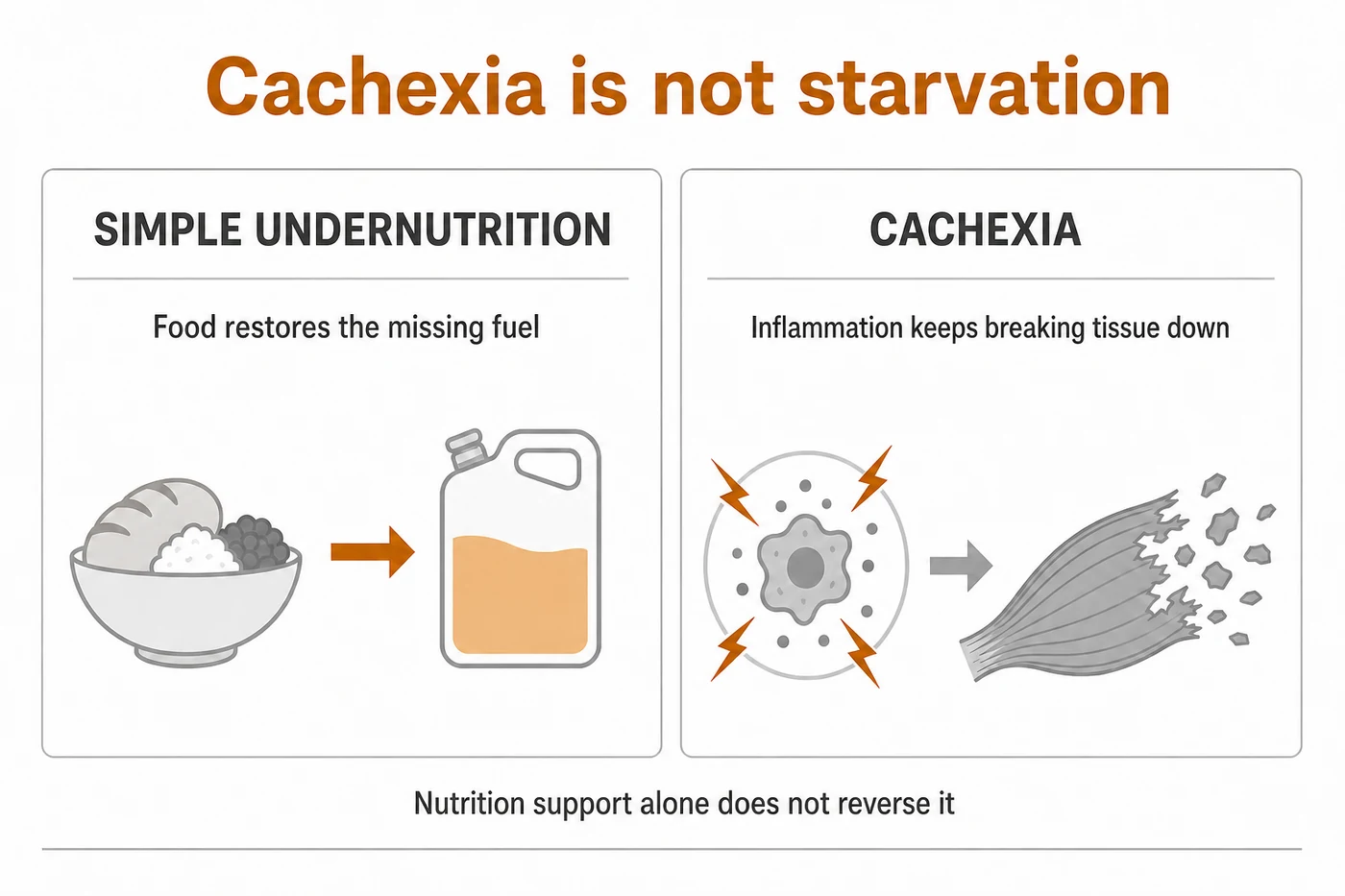
Cachexia: Symptoms, Causes, Diagnosis and Treatment
Cachexia is severe muscle and weight loss driven by a serious illness rather than by a shortage of food, which is why eating more does not reverse it. What it looks like, what causes it, and what treatment can and cannot do.
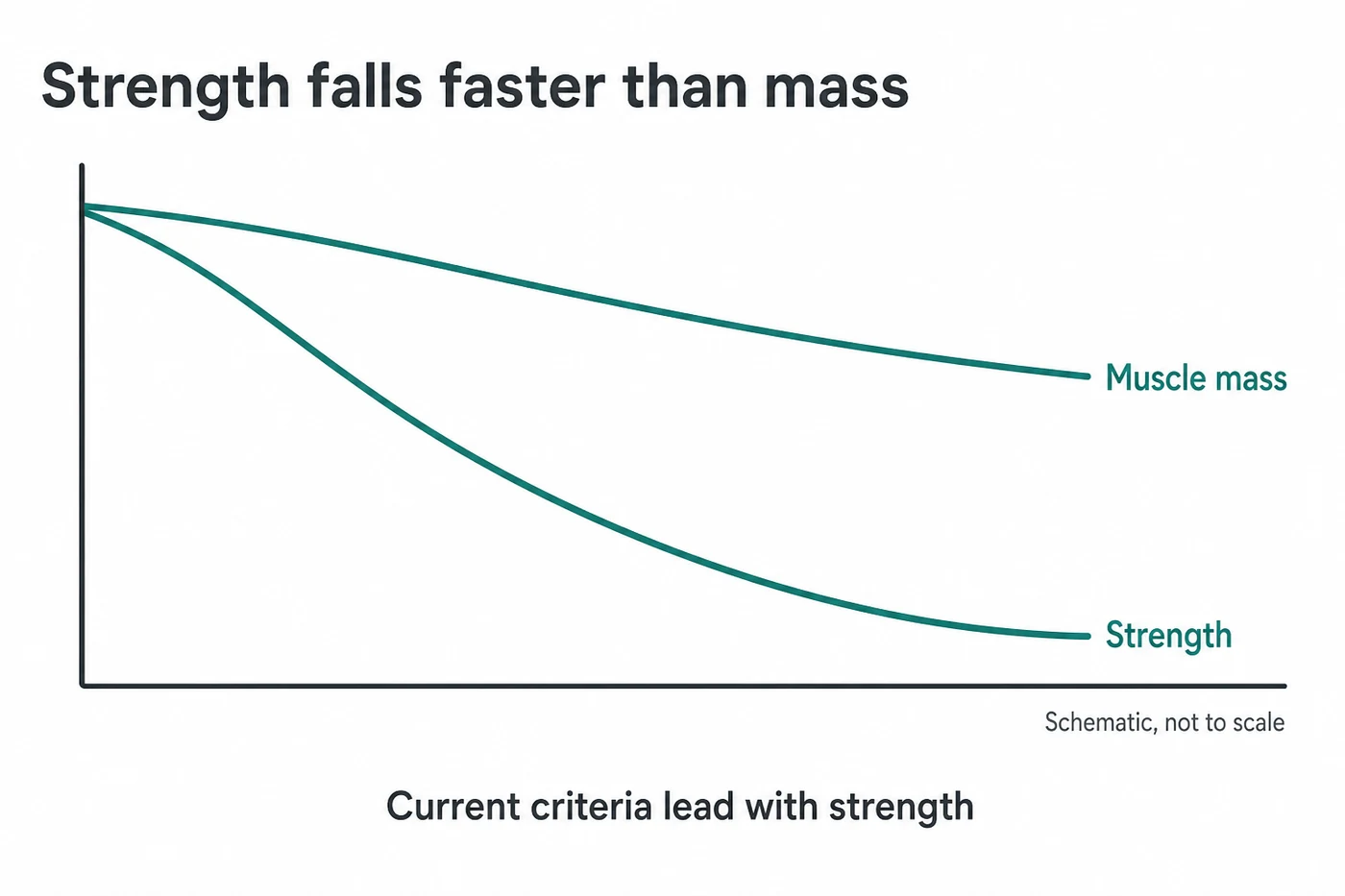
Sarcopenia: Symptoms, Causes, Diagnosis and Treatment
Sarcopenia is the age-related loss of muscle strength and mass, and it is one of the few conditions where the best-evidenced treatment is not a drug. What it is, how it shows up, what causes it, how it is diagnosed, and what actually helps.
Emery-Dreifuss Muscular Dystrophy: The Triad, the Genes, and the ICD-10 Code
Emery-Dreifuss muscular dystrophy is defined by three things: early joint contractures, a humeroperoneal pattern of weakness, and cardiac conduction disease. The heart is what makes the diagnosis urgent, and there is no dedicated ICD-10 code.
Limb Girdle Muscular Dystrophy: Subtypes, Symptoms, and ICD-10 Codes
Limb girdle muscular dystrophy is not one disease but a group of inherited muscle disorders sharing a pattern of shoulder and hip weakness. Here is how the subtypes are named, how the diagnosis is made, and which ICD-10 codes apply.
Muscular Dystrophy ICD-10: The G71.0 Codes by Subtype
G71.0- is a parent code that will not bill on its own. Here is the full subtype list, the expanded limb-girdle codes, where Emery-Dreifuss lands, and why myotonic dystrophy is somewhere else entirely.
Sarcopenia ICD-10: M62.84 and What the Record Must Show
M62.84 is billable, has been since October 2016, and carries a Code first instruction most coders never apply. Here is the documentation that supports it and the codes it gets confused with.
Cachexia ICD-10: R64, E88.A and the Documentation That Decides
Cachexia is no longer a single code. R64 covers cachexia with no documented cause, E88.A covers cachexia due to an underlying condition, and an Excludes1 note keeps them apart.
Cardiac Cachexia: How It Is Defined and Why It Matters
Cardiac cachexia is the muscle and tissue wasting that develops in advanced heart failure. It has a specific weight-loss threshold, a fluid problem that hides it, and prognostic weight independent of ejection fraction.
Cachexia Definition: What the Consensus Criteria Actually Say
Cachexia is illness-driven muscle loss that food alone cannot reverse. Here is the consensus definition, the diagnostic thresholds, and what separates it from starvation and from sarcopenia.
Sarcopenia Treatment: What the Evidence Actually Supports
One intervention carries a strong guideline recommendation, one carries a conditional one, and two widely promoted options carry none at all. Here is what the sarcopenia guidelines and trials actually say, including why no drug has been approved.
Sarcopenia Symptoms: Early Signs, Screening and When to Ask for Help
Sarcopenia rarely announces itself. The early signs look like ordinary ageing, which is why it goes unrecognised for years. Here is what the symptoms actually are, what they are not, and what a clinician measures when you report them.
Sarcopenia Definition: How the Criteria Changed and What They Say Now
Sarcopenia has a formal definition, and it has been rewritten twice since 2010. Here is what EWGSOP2 actually requires, the cut-off points it publishes, how the Asian criteria differ, and what the 2024 global consensus changed.
What Is Muscle Atrophy? A Plain Definition of Muscle Wasting
A direct answer for anyone who has just met the term. What muscle atrophy means, how it differs from dystrophy, sarcopenia and cachexia, what it looks like, and when it is worth getting checked.
Muscle Atrophy: Types, Causes, Diagnosis and Whether It Reverses
Muscle atrophy is a sign rather than a diagnosis, and the type matters more than the word. Here is how disuse, neurogenic and disease-driven atrophy differ, how clinicians work out which one is present, and what the evidence says about recovery.
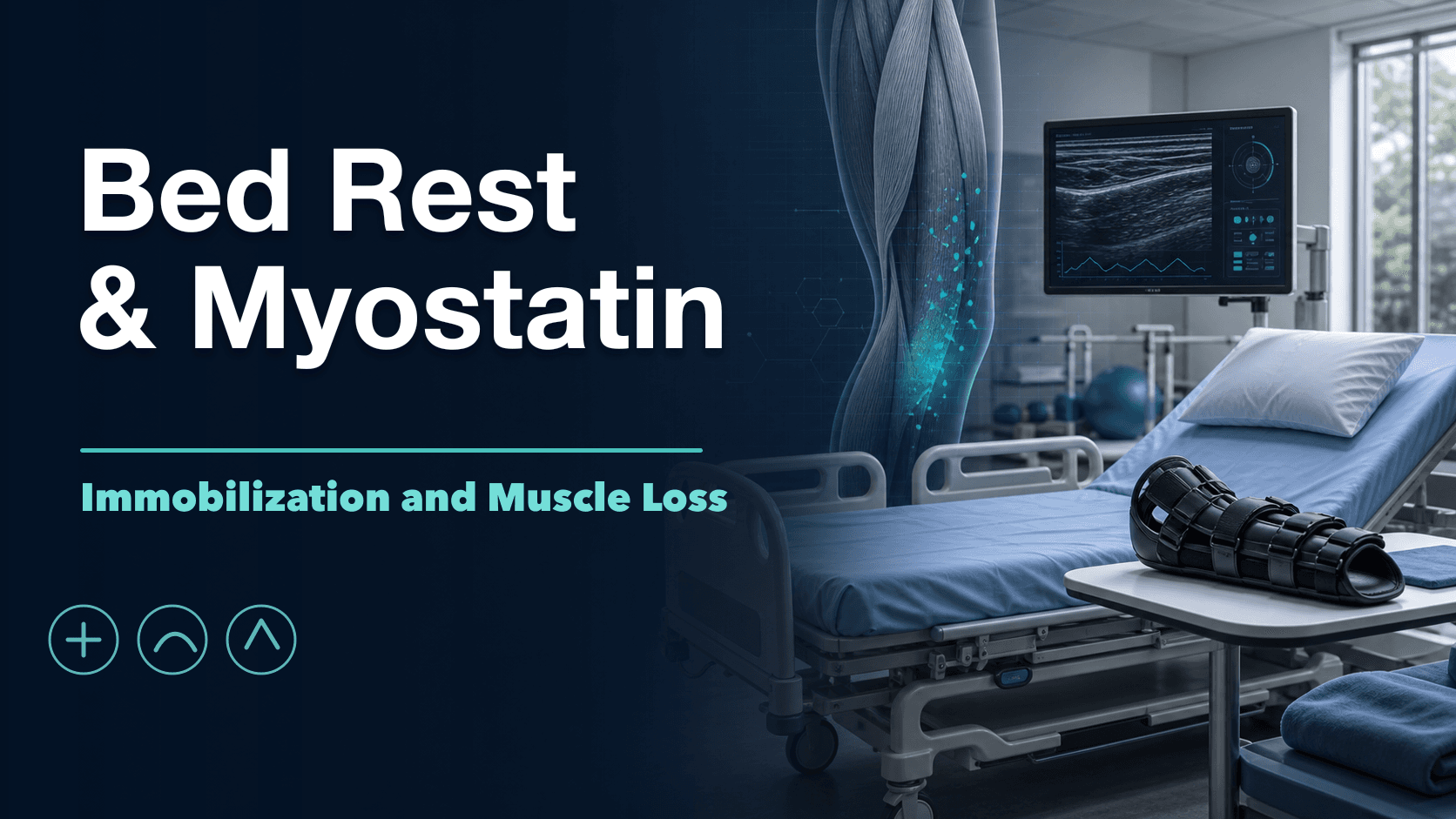
What Bed Rest Does to Your Myostatin (and Muscle)
Bed rest is not rest. After three days of immobility, myostatin transcription climbs, atrogenes light up, and muscle starts breaking down faster than calories can fix.
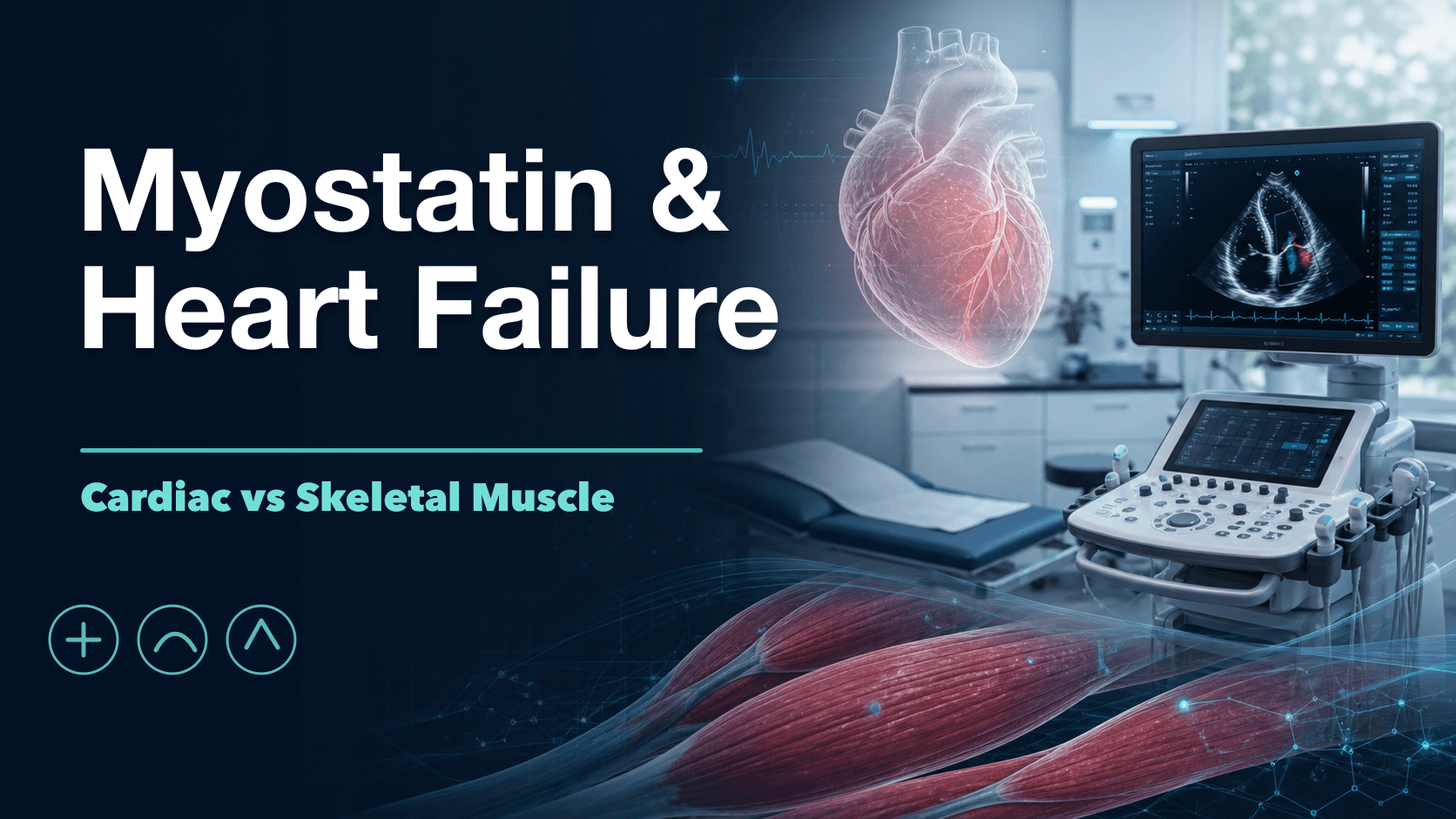
Myostatin and Heart Failure: Cardiac vs Skeletal Muscle
Myostatin behaves differently in cardiac muscle than in skeletal muscle. The failing heart secretes it. Skeletal muscle gets the worst of it. Blocking it everywhere is harder than it sounds.

Myostatin, Insulin Resistance, and Type 2 Diabetes
Myostatin is a muscle gene, but its effects spill into insulin signaling, glucose uptake, and metabolic syndrome. People with high serum myostatin look insulin-resistant before the diabetes label arrives.
Myostatin in Chronic Kidney Disease: The Dialysis Muscle-Loss Connection
CKD does not just damage kidneys. It rewires muscle protein turnover through a uremic environment that drives myostatin up, IGF-1 down, and lean mass into ongoing decline.
Myostatin and Cancer Cachexia: Why Muscle Wasting Resists Calories
Cancer cachexia is not starvation. Patients who eat enough still lose muscle, and myostatin and its sibling activin A are central to why food alone cannot stop it.
Myostatin and Duchenne Muscular Dystrophy: What the Trials Showed
Duchenne muscular dystrophy was supposed to be the disease that proved myostatin inhibitors. Eight programs, three sponsors, and one common failure pattern later, the field is still trying.
Myostatin Deficiency in Humans: The German Baby, Liam Hoekstra, and What the Gene Does
Myostatin deficiency in humans is rare, real, and often oversold. A German baby, an American toddler, and a 2026 UK Biobank study now anchor what we actually know.
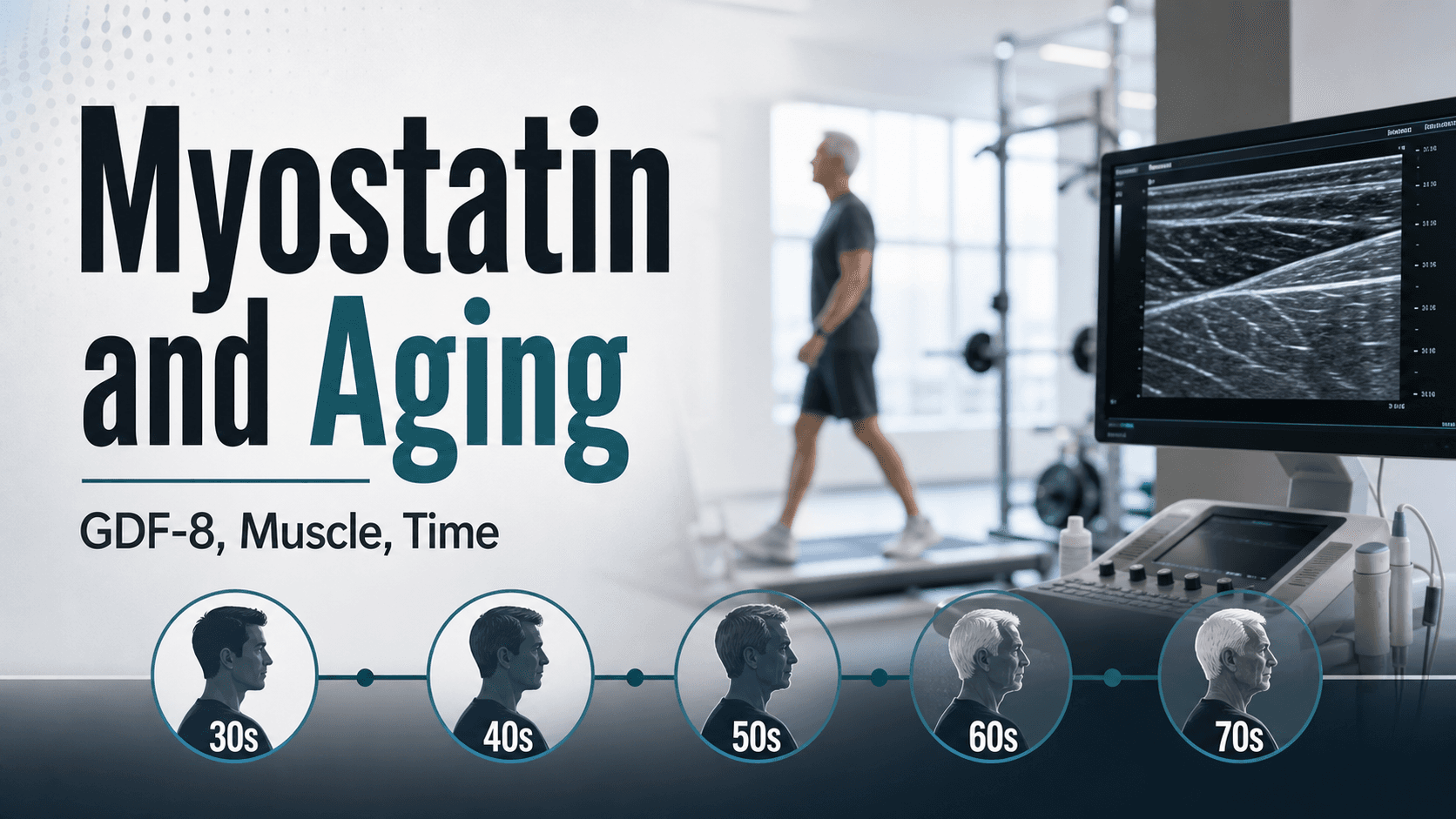
Myostatin and Aging: How GDF-8 Changes From Your 30s to Your 70s
Myostatin and aging is not a clean upward line. Lean mass drops, anabolic resistance climbs, and GDF-8 only tells part of the sarcopenia story.
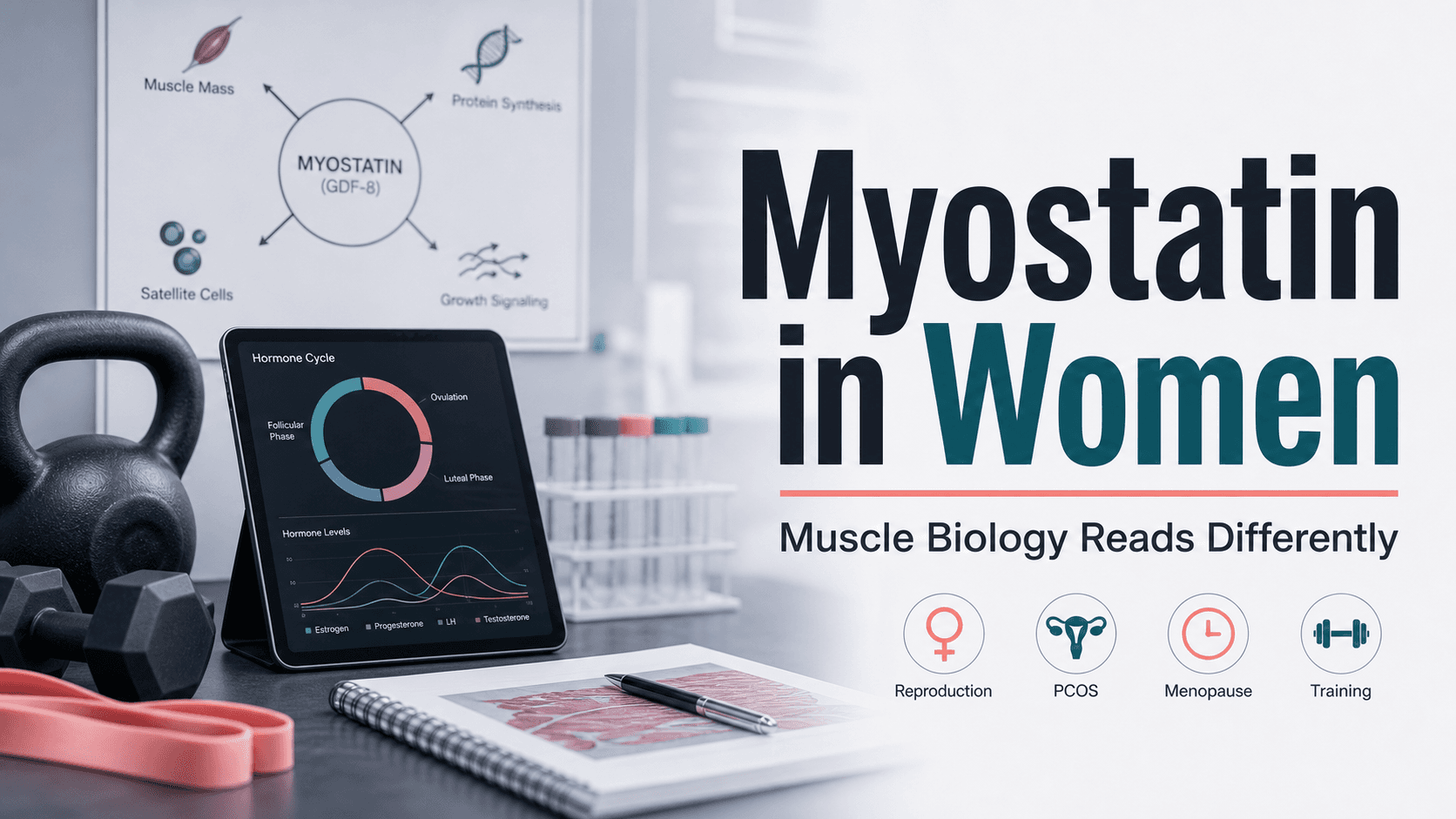
Myostatin in Women: Why Female Muscle Biology Reads Differently
Myostatin in women behaves differently than the gym-bro story suggests. Reproduction, the menstrual cycle, PCOS, and menopause all shift the picture.
Myostatin Blood Test: Where to Get One and What the Result Means
A myostatin blood test sounds straightforward, but the assays measure different things, the reference ranges are shaky, and the most useful number is the follistatin-to-myostatin ratio. Here is what each available option actually delivers.
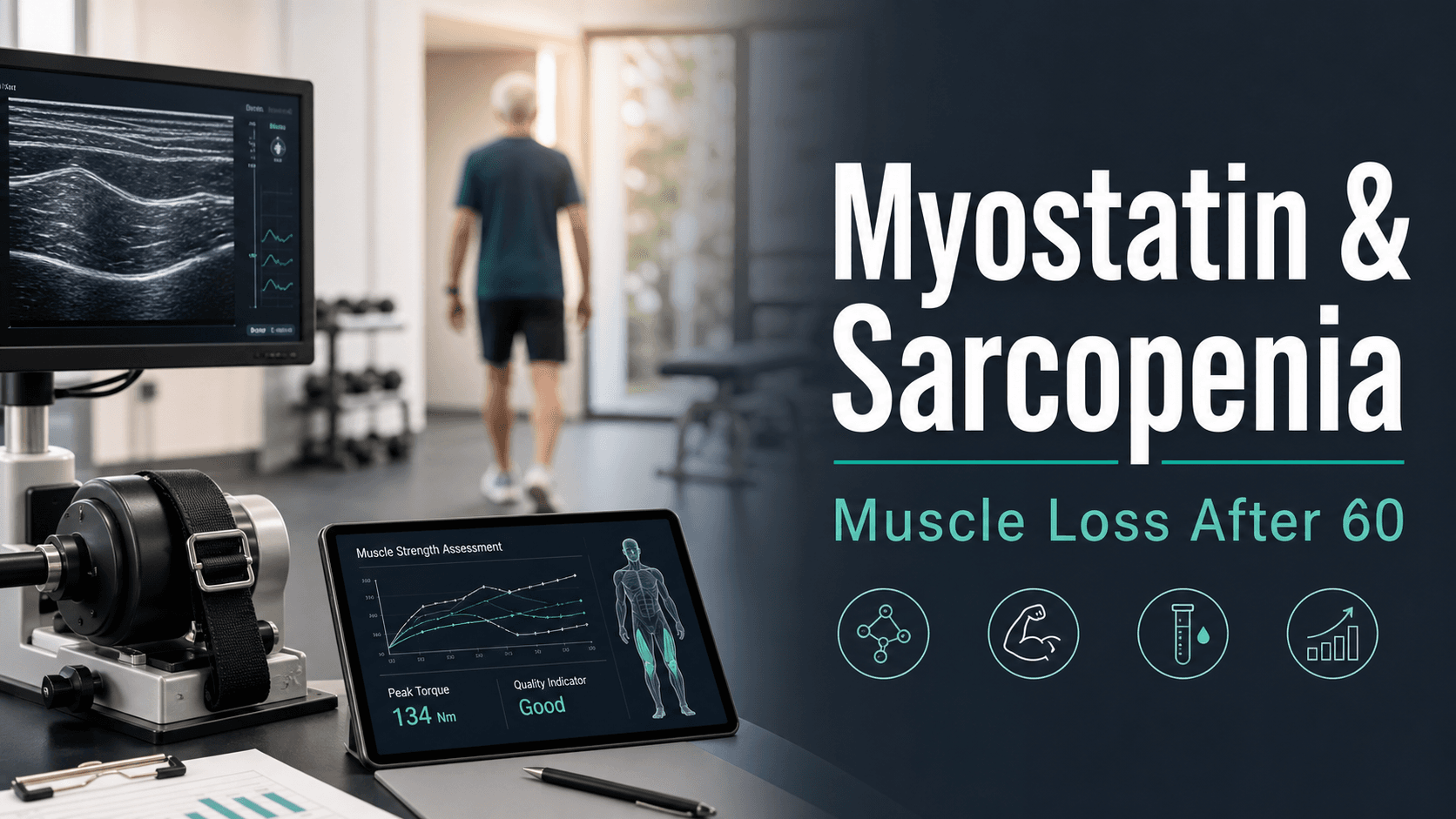
Myostatin and Sarcopenia: Why Muscle Loss Accelerates After 60
Myostatin is one of the clearest age-related muscle-loss biomarkers, and it explains why sarcopenia accelerates after 60. Here is what circulating GDF-8 actually does, what trials of myostatin drugs found, and what works right now.