
Most users worry about the wrong thing first. Follistatin side effects are not mostly about scary lab numbers — they are about injection-site reactions, FSH drift, and a small but real list of less common problems that show up at higher doses or longer cycles.
The data are uneven. The pattern is consistent.
Key takeaways
- Injection-site reactions are the most common side effect, reported in 15–25% of subjects at typical doses.
- FSH can drop temporarily by 15–30% within 24–72 hours of dosing; antibody studies show up to 75% FSH suppression at high systemic exposure.
- 11 male bodybuilders developed central serous chorioretinopathy after 1 mg FS-344 injections — about 10× a normal cycle dose.
- About 17% of subjects in a 16-week FS-315 protocol showed mild ALT rises that resolved 4–6 weeks after stopping.
- Cancer signaling is tissue-dependent: protective for some cancers, pro-tumorigenic for others.
- Long-term safety beyond 16 weeks is essentially unstudied, and most adverse data come from small unblinded protocols.
Follistatin side effects by dose — quick view
Start with the dose-by-dose pattern. The Minicircle and peptide-protocol data line up around the same picture.
| Dose tier | Injection-site reactions | Systemic effects | Notes |
|---|---|---|---|
| 100–200 mcg (typical peptide cycle) | 10–15% | <5% | Most common starting range; usually mild and self-limited. |
| 300–400 mcg | 20–30% | 10–15% | Headache, fatigue, and FSH drift more likely. |
| 500–600 mcg | 25–35% | 15–25% | Some protocols stop here for tolerability reasons. |
| 800 mcg+ | ~40% adverse-event rate | Study terminated early in at least one protocol | Not a sensible target dose. |
| 1 mg single shot (FS-344) | High | CSCR documented in 11 men | Roughly 10× a normal cycle; resolved in 2–3 months in most. |
| Minicircle plasmid (single subcutaneous) | Low | ~33% mild LDL rise of ~8 mg/dL, 0 serious AEs in 500+ patients | Gene-therapy context, not peptide. |
That table is the headline. Each section below explains what is behind the numbers.
For dose protocols themselves, the follistatin dosage guide sets out the cycle math. For the isoform-specific risk profile, see follistatin 315 vs 344.
Injection-site reactions — the most common problem
Local, not systemic. Redness, swelling, and mild pain at the injection site show up within hours and clear in 24–48 hours. Reported rates run 15–25% at 100–200 mcg, 20–30% at 300–400 mcg, and 25–35% above 500 mcg.
What real users report: unusually severe pain at the site for a day or two, localized swelling and warmth, occasional infection signs that need a clinician check, and "flu-like" symptoms that are typically tied to His-tagged or contaminated product rather than the molecule itself.
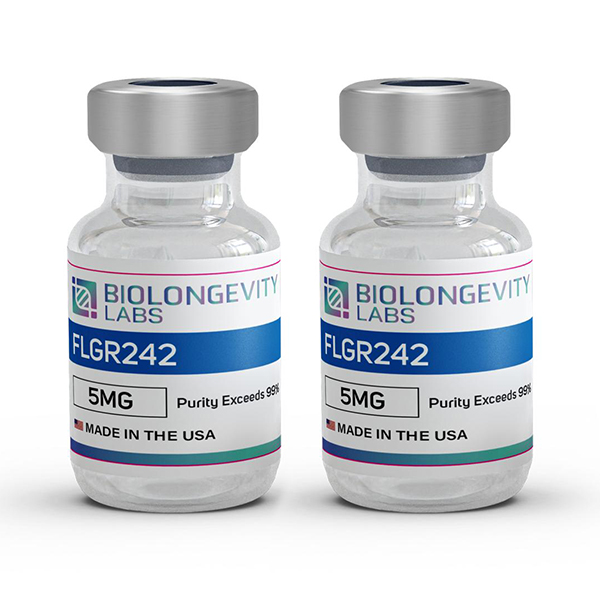
That last point matters. WADA forensic testing of 17 vendor products found only 9 contained any follistatin, and all 9 carried bacterial His-tags and protein clumping. A lot of "follistatin side effects" online are actually reactions to a tagged or contaminated vial.
FSH, activin, and the HPG axis
The activin and inhibin pathway is the part most lifters underestimate. Follistatin binds activins; activins drive pituitary FSH release.
Documented short-term changes: temporary 15–30% FSH drops within 24–72 hours after a typical peptide dose, in both sexes; a 2025 antibody study reporting 75% FSH suppression within a week and impaired ovulation in females at strong myostatin-pathway block; and no FSH, LH, testosterone, or estrogen changes in the published AAV-FS344 sIBM trial at 6 × 10¹¹ vg/kg local quadriceps injection, likely because FS-344 stays local.
Practical implications: if you are planning conception, follistatin cycles are not a low-risk choice; check baseline FSH and LH before starting and at 4–6 weeks if running anything beyond a short cycle; systemic FS-315 carries more theoretical HPG risk than local FS-344; and antibody-based myostatin programs in a separate drug class have shown ovarian and testicular changes in early data.
For broader low-myostatin physiology context, the low myostatin article sets out the normal-vs-suppressed range.
Tendon and connective tissue
Myostatin keeps tendons stiff. Removing it has consequences.
Mouse and primate data show that myostatin-deficient animals develop thinner, weaker, more brittle tendons. Lifters who run follistatin cycles often report:
- Faster strength gain than tendon adaptation can keep up with.
- New connective-tissue niggles in shoulders, elbows, and knees.
- A "stronger than my joints" feeling, usually around weeks 3–6.
There is no clean human longitudinal study on long-cycle tendon outcomes. The safest read is to keep cycles short, hold or reduce training loads in the first 2–3 weeks, and treat new tendon pain as a real warning rather than a nuisance.
Eye effects — the CSCR reports
This is the niche-but-real risk. A 2020 case series documented 11 male bodybuilders who developed central serous chorioretinopathy (CSCR) after high-dose subcutaneous follistatin-344 injections. All affected users injected complete 1 mg vials, roughly 10× a typical 100 mcg cycle dose; single-injection cases resolved on average in about 2.3 months; three patients who used multiple injections experienced recurrent episodes.
CSCR shows up as central blurry vision, distorted shapes, or a dim spot in the middle of the visual field. That symptom needs an ophthalmology referral immediately, not a forum post. The takeaway is dose-control: a 100 mcg cycle dose is a very different exposure from a 1 mg shot.
Glucose, insulin, and metabolic markers
This is mixed. Most short-term peptide protocols do not report large glucose disruption, but the gene-therapy data add nuance.
- Minicircle's 43-subject plasmid trial reported a roughly 8 mg/dL LDL cholesterol rise in about one-third of patients.
- One independent review found elevated circulating follistatin levels are associated with higher type 2 diabetes risk in epidemiological samples; causation is unproven.
- The triplhelix overview reports anecdotal HgA1c improvements (~32% reduction in some patients), but those numbers are not from controlled trials.
Reasonable response: pull a fasting glucose, HbA1c, and lipid panel at baseline and at week 8–12 if you are running anything beyond a short cycle.
Liver enzymes and renal markers
Short-term ALT drift is the most consistent lab finding. In a 16-week FS-315 protocol, about 17% of subjects had mild ALT rises of 1.5–2× the upper limit of normal, which resolved 4–6 weeks after stopping.
Real-world checks:
- CMP / liver panel at baseline.
- Repeat at week 4–6 in any cycle longer than 4 weeks.
- Recheck 4–6 weeks after stopping if anything moved.
Renal markers (BUN, creatinine, eGFR) are not commonly reported as disturbed in the available human data, but they sit in the same panel and should not be skipped.
Anti-drug antibody risk
Less talked about. Any injected protein can trigger anti-drug antibody formation that neutralizes the product or, rarely, the body's own version.
- Macaque studies of FS-315 protocols showed altered T-cell proliferation and modified cytokine production at extended exposures.
- Extended-protocol human data showed CD4+ T-cell counts drifting down 8–12% from baseline at 12 weeks, returning to baseline 8–12 weeks after stopping.
- The Mendell sIBM AAV trial kept anti-AAV1 and anti-follistatin antibody titers at or below 1:50 across follow-up.
That suggests short cycles and proper isoforms are well tolerated, but chronic exposure may shift immune markers. The plain advice is to avoid open-ended dosing.
Cancer signaling — the unresolved question
Follistatin is not one thing for cancer. It is protective in some contexts and pro-tumorigenic in others.
The published pattern:
- Possibly protective in breast, lung, liver, and ovarian cancers.
- Possibly pro-tumorigenic in prostate, esophageal, stomach, and skin cancers (melanoma, basal cell).
- One thymic tumor series correlated higher follistatin with worse outcomes.
The honest summary: nobody should run follistatin during active or recent cancer treatment, and anyone with a strong family or personal cancer history should avoid it outside a monitored clinical trial.
Gene therapy-specific risks
Different category, different risk list. The Minicircle plasmid and AAV-FS344 approaches share follistatin biology but add their own concerns.
Plasmid (Minicircle FST-344): most common reported issue is a mild LDL rise of ~8 mg/dL in roughly one-third of patients; no serious adverse events reported across 500+ patients in company-run data; long-term durability and immune response to repeat dosing are not independently verified; treatment is not recommended for people pregnant or planning pregnancy within 12 months, and the minimum age is 23.
AAV1-FS344 (Mendell sIBM trial): no treatment-related adverse events at the published dose; anti-AAV1 antibodies can prevent re-dosing with the same serotype; local quadriceps injection limits systemic spread.
For the broader gene therapy picture and the Bryan Johnson context, see the follistatin gene therapy article.
Real-world side effect reports from peptide users
What forums consistently surface, in pattern not data: injection-site soreness in the muscle injected the next day, sometimes intense; vivid pumps and sustained fullness during cycles; tendon "tightness" or new joint niggles around weeks 3–6; increased appetite, sometimes large enough to drive unintended fat gain; mild headaches in the first week; mood lift in some users and flat or fatigued days in others; and a cycle-end "rebound" feeling as myostatin returns to baseline within 10–14 days.
What does not consistently show up: gynecomastia, large blood-pressure changes, or systemic infection — unless the vial itself is contaminated, which is the bigger risk for many users than the molecule itself.
When to stop a cycle
Hard list. Stop and call a clinician if any of these appear:
- Central blurry vision, a dim or distorted spot in the visual field.
- New tendon pain that does not settle with rest.
- Severe injection-site reaction with spreading redness, fever, or pus.
- Unexplained yellowing of the skin or eyes.
- New or worsening menstrual irregularity, or fertility plans changing during a cycle.
- Any new lump, mole change, or unexplained weight loss.
Stopping a follistatin cycle is uneventful for most users. Continuing through warning signs is the avoidable mistake.
Sources and notes
- Mendell 2017 — Follistatin gene therapy for sporadic inclusion body myositis
- Minicircle FST-344 plasmid trial preprint
- SelfHacked — Benefits and side effects of follistatin
- MyPeptideMatch — Follistatin 315 side effects overview
- ScienceInsights — Is follistatin safe? Cancer and hormonal risks
- AllAboutPeptides — Follistatin 344 muscle benefits and risk data
- JayCampbell.com — Follistatin 344 peptide review
- Stacktrax follistatin guide — WADA forensic purity study
Frequently Asked Questions
What are the most common follistatin side effects?
Injection-site reactions are by far the most common, reported in 15–25% of users at typical doses. Mild headaches, fatigue, and short-term FSH drops are next most common.
Does follistatin shut down testosterone?
Follistatin can temporarily lower FSH 15–30% in both sexes, and at high systemic exposure can affect LH and downstream testosterone. The FS-344 isoform was selected in trials specifically to limit HPG-axis effects.
Can follistatin cause cancer?
Follistatin's effect is tissue-dependent. It appears protective in some cancers (breast, lung) and pro-tumorigenic in others (prostate, esophageal, stomach, skin). It is not recommended for anyone with active, recent, or strong family history of cancer.
Does follistatin damage tendons?
It may. Myostatin-deficient animal models show thinner, more brittle tendons. Lifters often report new joint or tendon niggles around weeks 3–6 of a cycle. Long-term human data are missing.
Are gene therapy side effects different from peptide side effects?
Yes. The Minicircle plasmid trial's main issue was a small LDL cholesterol rise; the AAV1-FS344 sIBM trial reported no treatment-related adverse events. Peptide cycles add injection-site reactions, FSH drift, and possible eye reports at high doses.
How long should I cycle follistatin to limit side effects?
Most documented protocols are short — typically 10 to 30 days, often with a 3–4 week break. Cycles beyond 16 weeks are essentially unstudied in humans, and chronic exposure raises immune, liver enzyme, and tendon concerns.
This article is for educational purposes only and is not medical advice. Follistatin peptides and gene therapies lack FDA clearance for human use, are prohibited in regulated sport, and have important unknown long-term risks. Talk with a qualified clinician before any cycle, especially if you take medication, plan a pregnancy, have a cancer history, autoimmune disease, or a tendon or eye condition.