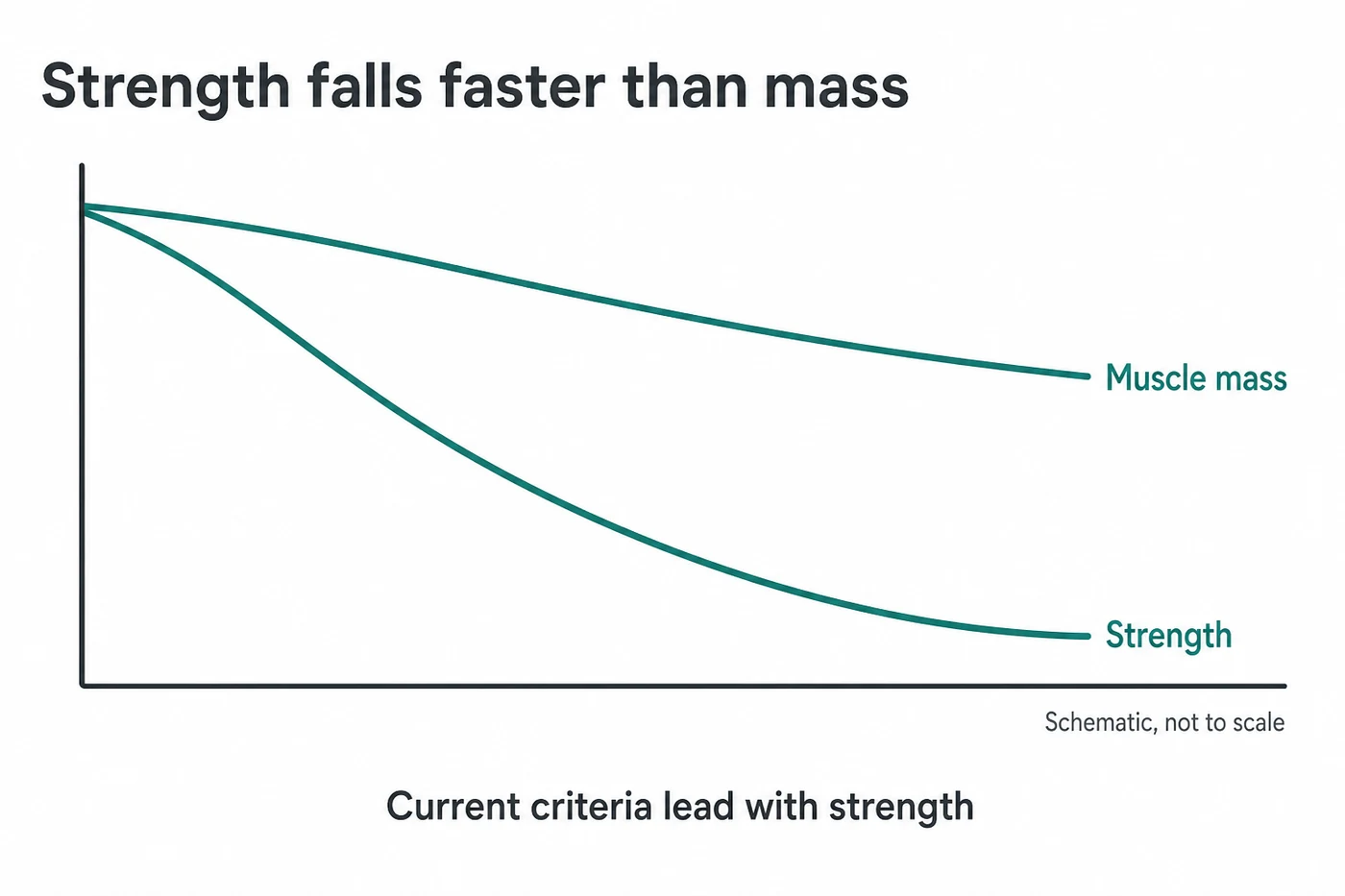
Sarcopenia is the age-related loss of muscle strength and muscle mass. The current criteria lead with strength rather than size, because how much force a person can produce predicts falls, hospital stays and loss of independence better than how much muscle shows up on a scan.
Key takeaways
- Sarcopenia is a defined muscle disease, not a loose description of slowing down. The European criteria put low muscle strength first, use low muscle quantity to confirm it, and grade severity on physical performance.
- It presents as tasks rather than symptoms: pushing off the arms of a chair, taking the handrail, being left behind on a familiar walk. It is not painful, and body weight can stay flat while muscle goes.
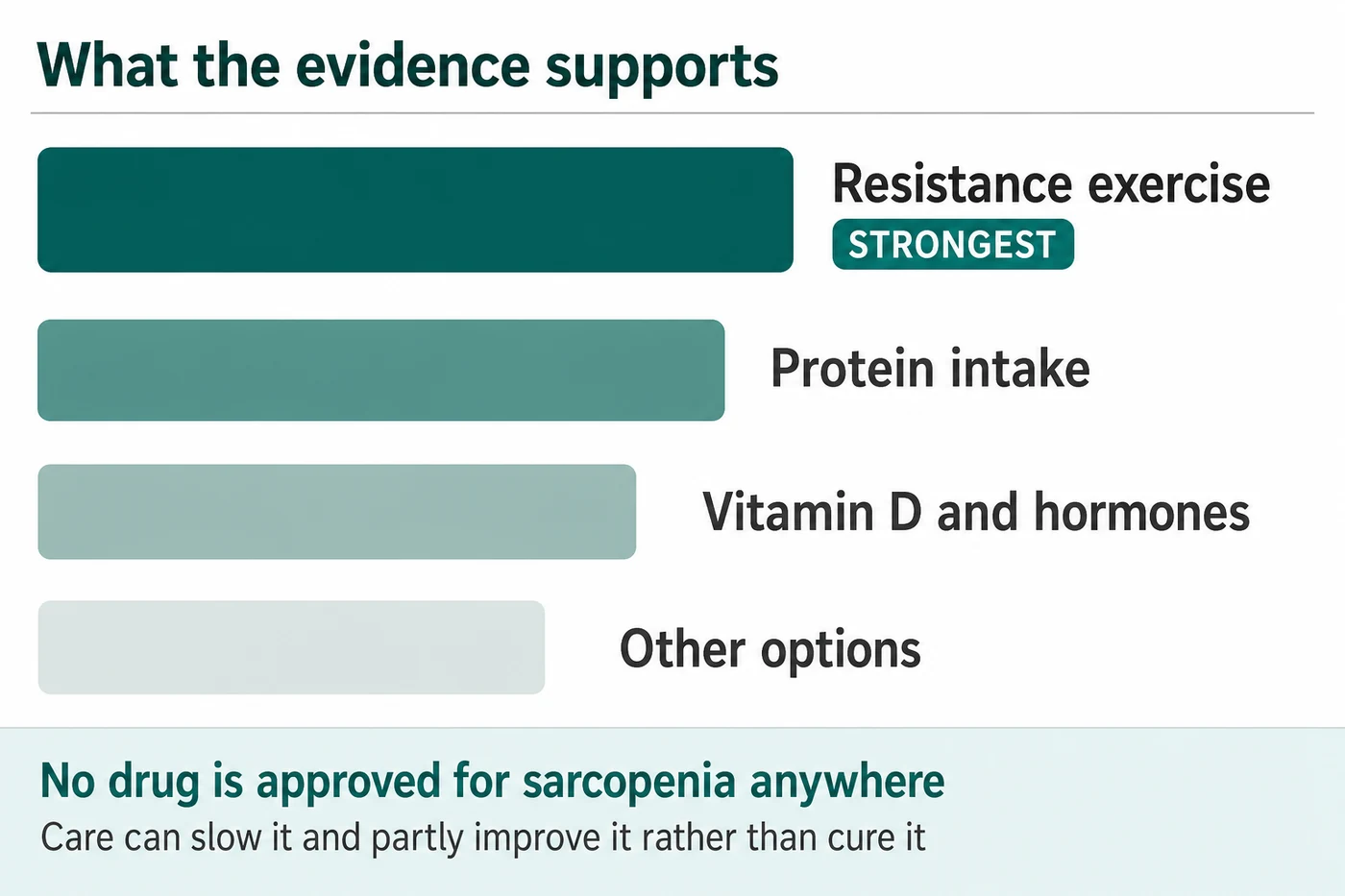
- Resistance-based physical activity is the only intervention carrying a strong recommendation in the international guidelines. Protein carries a conditional one. Vitamin D and anabolic hormones received no recommendation either way.
- No drug is approved for sarcopenia anywhere. The antibodies targeting the myostatin pathway added lean mass without matching gains in function, and the two furthest along are now being developed for obesity instead.
- Act early because of what sarcopenia predicts: falls, fractures, worse surgical outcomes, loss of independence and higher mortality. Strength and walking capacity respond to training, which is why this is worth reporting rather than accommodating.
What sarcopenia is
Muscle is not a fixed asset. It is continuously broken down and rebuilt, and the balance between those two processes shifts with age. Harvard Health describes a gradual decline of about 3% to 5% of muscle mass per decade starting at about age 30, and notes that strength training changes that trajectory.
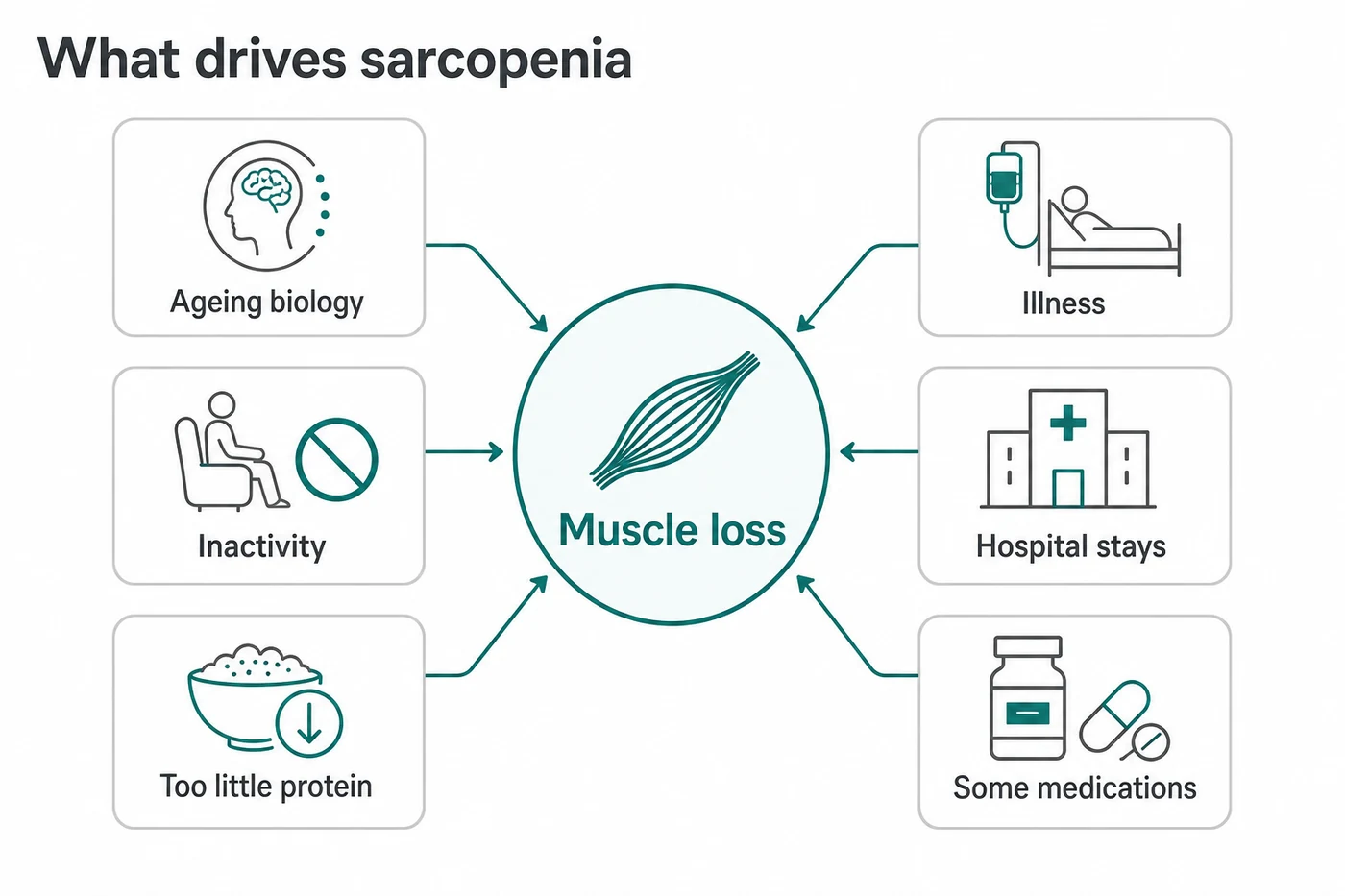
Sarcopenia is what happens when the drift crosses a threshold. EWGSOP2, the revised European consensus published in 2019, calls it a muscle disease, describing it as muscle failure rooted in adverse muscle changes that accrue across a lifetime. It is common in older age but is explicitly not restricted to it, and it can be driven by illness, immobility or inadequate intake rather than by ageing alone.
The structural point worth carrying away is that strength comes first. Low muscle strength is the primary indicator of probable sarcopenia. Low muscle quantity or quality confirms the diagnosis. Poor physical performance marks it as severe. That ordering replaced an earlier mass-first definition because strength predicts outcomes better and is far easier to measure in a clinic.
Prevalence figures move around, largely because the criteria have moved around. Harvard Health puts sarcopenia at 5% to 13% of people aged 60 to 70 and up to 50% of those aged 80 or over. StatPearls reports much the same ranges and attributes the spread to inconsistent diagnostic criteria and differing study populations.
If you want the criteria themselves, our sarcopenia definition page sets out the published EWGSOP2 cut-off points, explains why the Asian Working Group uses different ones, and covers what the 2024 global consensus changed.
What sarcopenia looks like day to day
Nobody notices a percentage. People notice tasks that used to be automatic.
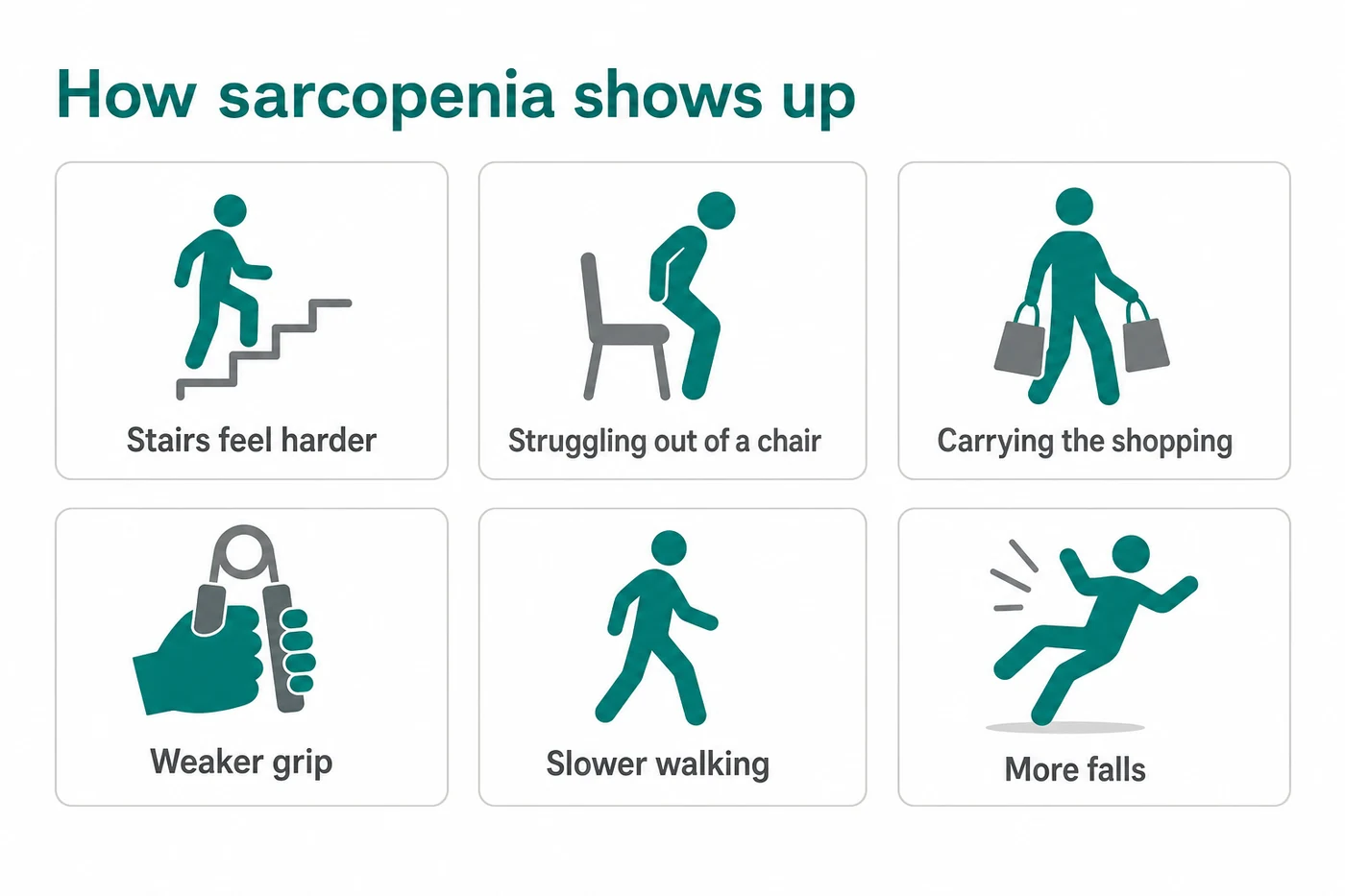
The earliest change is usually rising from a seat. Getting out of a low armchair, a car seat or a bath starts to need a push from the arms or a second attempt. Stairs stop being a reflex and become a decision, with the handrail now part of the plan. Walking pace drops without anyone choosing to walk slower, and family often register this first, as being left behind on a walk that used to be shared comfortably. Grip weakens, so jars, taps and a bag of shopping carried in one hand all get harder. Stumbles that used to be caught stop being caught, because the corrective step needs power that is no longer available.
Two things sarcopenia is not. It is not painful, because losing muscle does not hurt, so weakness that comes with pain points at an inflammatory muscle disease, a nerve problem or a joint problem instead. And it does not require weight loss, because fat can replace what muscle has gone, leaving weight and body mass index unchanged while strength falls away underneath. Visible thinning of the arms and legs arrives later, and can be almost invisible in someone carrying more body fat.
Our sarcopenia symptoms page takes these in the order they usually appear, covers the SARC-F questionnaire and its limits, and lists the patterns that are not sarcopenia and need seeing promptly, such as weakness confined to one limb, numbness, unintentional weight loss and difficulty swallowing.
What causes sarcopenia
Ageing accounts for part of it directly. Motor units thin out, fast-twitch type II fibres are lost disproportionately, and older muscle responds less to the same protein or training stimulus, an effect called anabolic resistance. StatPearls adds falling androgen and growth factor concentrations and rising inflammatory markers.
Ageing rarely acts alone, though, and the contributors stacked on top of it matter more in practice, because most of them can be changed.
Inactivity, and bed rest in particular. This is the fastest route in. Eleven healthy adults averaging 67 years old spent 10 days on continuous bed rest while eating a diet that met the recommended protein allowance. Knee extensor strength fell 13.2%, stair-climbing power fell 14%, and maximal aerobic capacity fell 12%. Those were healthy volunteers with nothing wrong with them.
Illness and hospital admission. EWGSOP2 calls sarcopenia secondary when a cause other than ageing is evident, and gives three routes: systemic disease, especially one that provokes inflammation, such as malignancy or organ failure; physical inactivity, whether from a sedentary life or from disease-related immobility; and inadequate intake of energy or protein. Someone admitted with an acute illness collects most of these at once, which is why function often does not come back on its own after discharge.
Not enough protein, or not enough food. Older adults need more protein per kilogram than the general adult recommendation, not less, while appetite tends to move the other way. Targets are covered below.
Medications. Some act on muscle directly. A 2025 review in the Journal of Neurology describes glucocorticoid-induced myopathy as common and often underdiagnosed, showing up as proximal weakness and atrophy. Others act indirectly by suppressing appetite and total intake. None of this is a reason to stop or change a prescription on your own. It is a reason to raise muscle loss with whoever prescribed it, because reviewing the medication list is part of a proper assessment.
How sarcopenia is diagnosed
The pathway is short, and none of it requires exotic equipment.
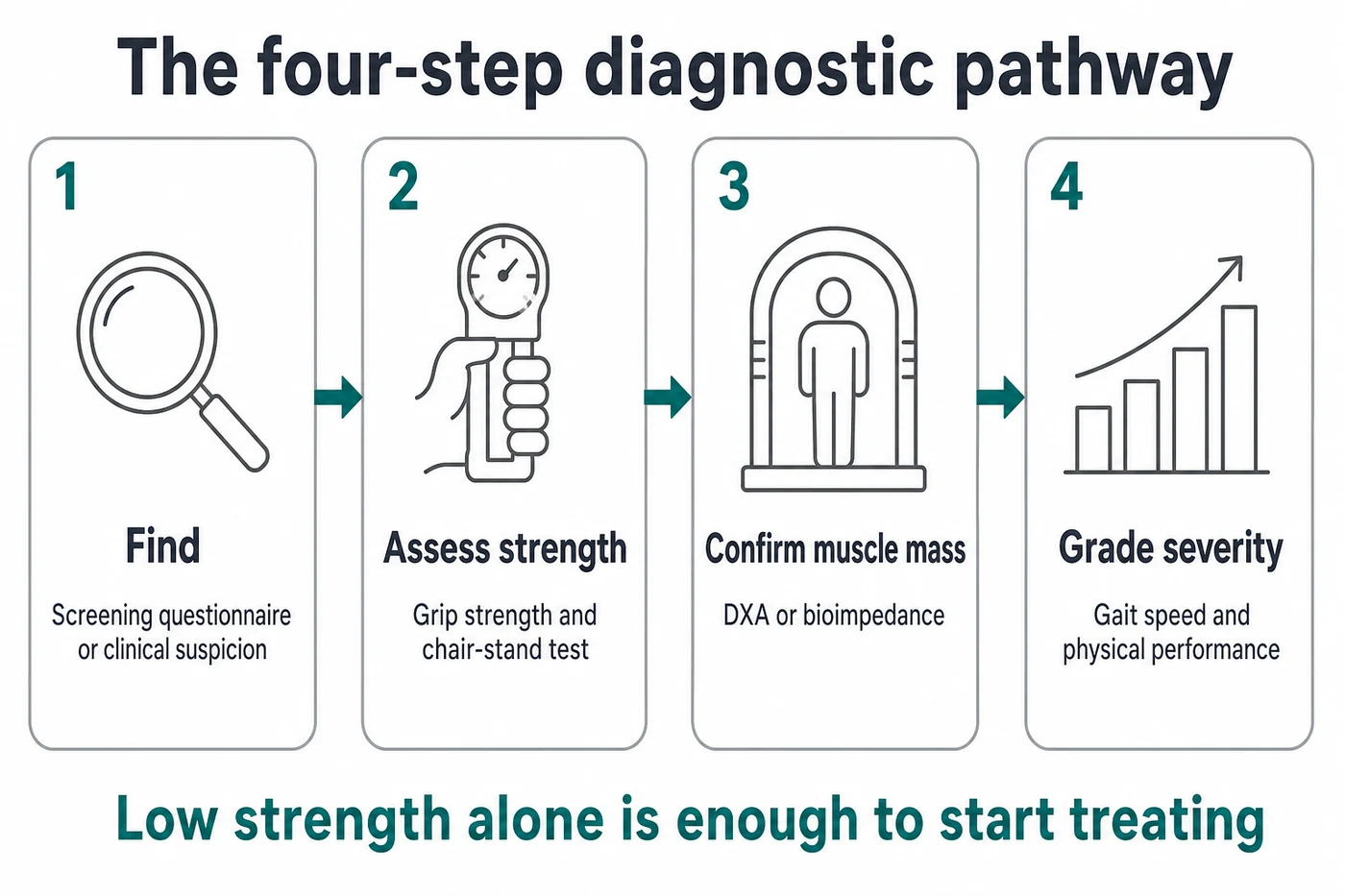
Case finding comes first, from clinical suspicion or the SARC-F questionnaire, five self-reported items covering strength, walking, rising from a chair, climbing stairs and falls. Strength is then measured, with a handheld dynamometer for grip or a timed five-repetition chair stand. If it is low, muscle quantity is confirmed with DXA or bioelectrical impedance. Severity is graded on physical performance, usually gait speed.
The published European thresholds sit behind each step, and they are not a self-assessment tool. A grip reading alone does not make a diagnosis, and a clinician also has to rule out the other causes of low strength, including depression, stroke, balance disorders and peripheral vascular disease. The full set of cut-off points is on our sarcopenia definition page, and the coding side, including what documentation supports ICD-10 code M62.84, is covered separately.
What sarcopenia treatment actually delivers
This is the part most readers came for, and the answer is unusually clear for a chronic condition.
The International Clinical Practice Guidelines for Sarcopenia, published by the ICFSR task force in 2018 and graded using GRADE, make exactly one strong recommendation: prescription of resistance-based physical activity. Protein supplementation or a protein-rich diet carries a conditional recommendation. Vitamin D supplementation and anabolic hormone prescription were both reviewed and received no recommendation in either direction. Other options had insufficient robust evidence to grade at all.
That inverts the usual expectation. The most heavily marketed categories are the ones the guideline declined to endorse, and the intervention that wins is the one nobody can sell you in a bottle.
On protein, the PROT-AGE position paper recommends at least 1.0 to 1.2 g per kg of body weight per day for people over 65, 1.2 g/kg/day or more for those exercising and active, and 1.2 to 1.5 g/kg/day for most older adults with acute or chronic disease. It states one explicit exception: people with severe kidney disease who are not on dialysis may need to limit protein instead. That exception matters, because the readers most likely to meet high-protein advice online overlap with those for whom it is wrong.
The largest test of the combined approach is SPRINTT, which randomised 1,519 community-dwelling adults aged 70 or over with physical frailty and sarcopenia across 16 sites in 11 European countries. Among participants with lower baseline function, mobility disability occurred in 21.0% of the intervention group against 25.0% of controls, and physical performance favoured the intervention by 0.8 points on the Short Physical Performance Battery at 24 months. Those who started with better function saw no benefit.
The honest summary is that current treatment slows and partially improves sarcopenia rather than curing it. Our sarcopenia treatment page has the full guideline table, the SPRINTT results and the drug record.
The practical first step, if any of this describes you or someone you care for, is not a supplement order. It is asking a clinician or physiotherapist to assess strength and to write a resistance training programme that accounts for falls risk, cardiac disease, recent fracture or recent surgery. That prescription is the intervention.
Why sarcopenia is worth catching early
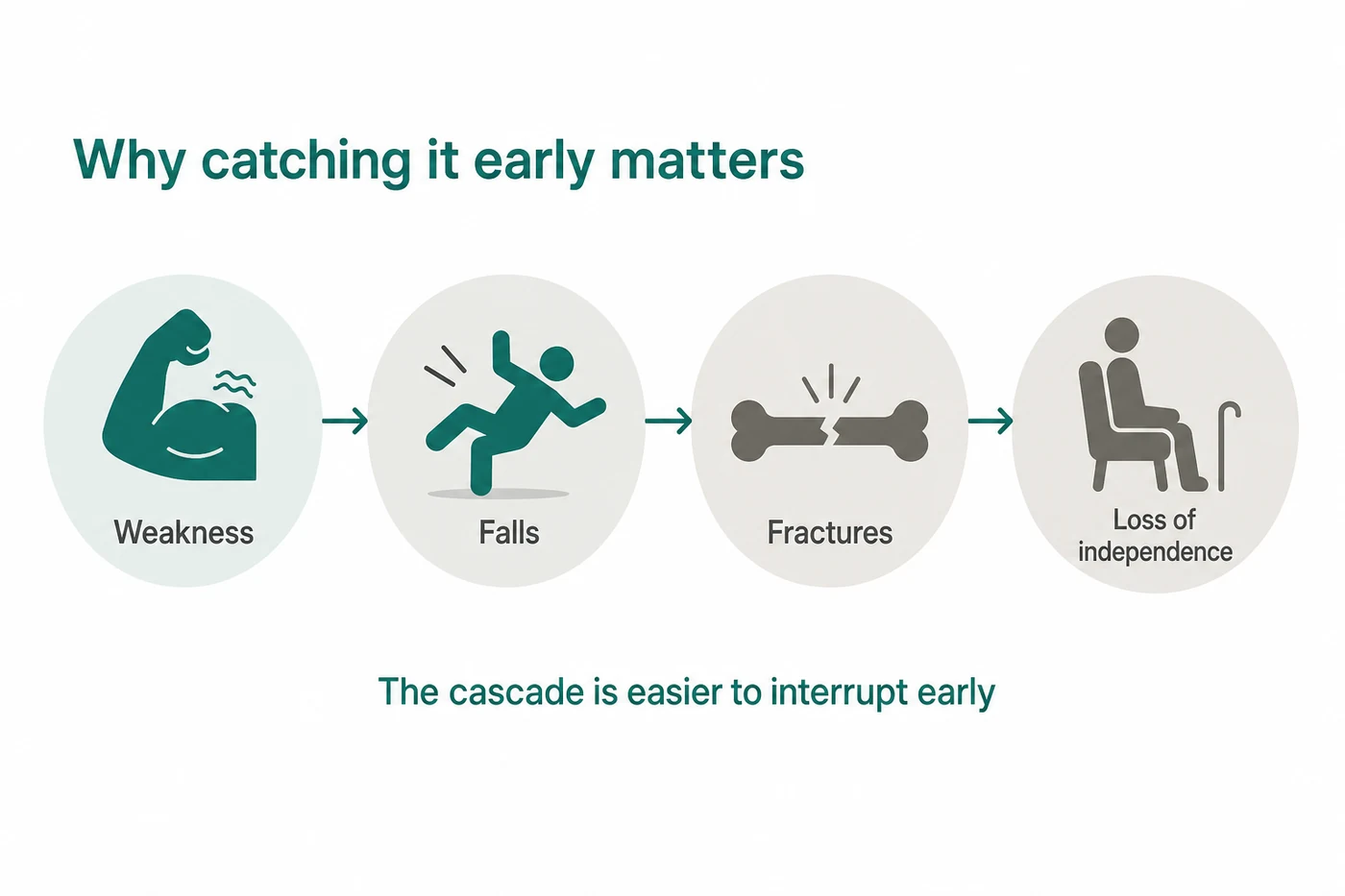
The 2019 Lancet seminar describes sarcopenia as a progressive and generalised skeletal muscle disorder associated with increased adverse outcomes including falls, functional decline, frailty and mortality.
StatPearls fills in the specifics. Meta-analysis found that sarcopenia significantly increases both fall and fracture risk. It is associated with increased mortality in end-stage renal disease, pancreatic cancer and chronic heart failure, with increased postoperative complications and greater mortality in general surgery, and with a higher risk of hospital-acquired infection.
Independence is the outcome that matters most here. Losing the ability to rise from a chair unaided, manage stairs or walk far enough to shop is what changes where and how someone lives. Those capacities are trainable, which is the argument for treating slowing down as reportable rather than inevitable.
Where myostatin fits
This site covers the myostatin pathway, so it is worth being precise about what it currently offers a person with sarcopenia, which is nothing you can buy.
Myostatin, also called GDF-8, restrains muscle growth, and the 1997 Nature paper describing mice that lacked it launched decades of drug development on the obvious inference that blocking it should treat muscle wasting. The clearest sarcopenia result is bimagrumab tested against optimised standard of care in older adults with sarcopenia. It increased lean body mass by 7% against 1% on placebo, and produced no significant difference from placebo on the primary physical performance outcome at 24 weeks. Both groups improved. The authors concluded that the effects of sarcopenia can be reduced with proper diet and exercise.
That pattern held across the field. The pathway moves mass reliably and function unreliably, and because the diagnostic criteria are anchored on strength and performance rather than mass, a drug that only moves mass does not, by definition, treat the disease. The two antibodies that got furthest are now being developed for obesity instead, bimagrumab alongside semaglutide in NCT05616013 and trevogrumab in NCT06299098, where preserving lean mass during rapid weight loss is the goal.
One gene therapy study here is recruiting: NCT07443826, an open-label, non-randomised phase 1/2a study of intramuscular AAV9-follistatin, with or without a VEGF plasmid, in age-related muscle decline. It plans to enrol 12 participants at a single site in Honduras. That is a safety and tolerability study with no control group, and it should be read as an early experiment rather than an available treatment.
The trial record drug by drug is on our myostatin and sarcopenia page. The compounds sold online under follistatin and myostatin-related names are unapproved research chemicals with no efficacy data in this condition, and no substitute for the training and protein the guidelines actually support.
Frequently asked questions
At what age does sarcopenia start?
Muscle mass declines at roughly 3% to 5% per decade from about age 30, according to Harvard Health, but that gradual loss is not sarcopenia. Sarcopenia is diagnosed when strength and muscle quantity fall below defined thresholds. EWGSOP2 is explicit that it is not restricted to older age.
How common is sarcopenia?
Estimates range widely because the criteria vary. StatPearls reports 5% to 13% of adults aged 60 and above, 11% to 50% of those aged 80 and above, and a worldwide figure of around 10% in people over 60. Harvard Health gives similar ranges.
What is the difference between sarcopenia and frailty?
Sarcopenia is a specific skeletal muscle disease with published thresholds for strength, muscle quantity and physical performance. Frailty is a broader state of reduced reserve across multiple systems, of which muscle is one. They overlap heavily, which is why SPRINTT enrolled people with both, but they are not interchangeable terms.
What should I do first if I think I have sarcopenia?
Raise it with a clinician rather than starting anything on your own. A useful appointment covers when the change started, which tasks got harder, any recent illness or period of reduced activity, and a review of current medications. Ask for strength to be measured, with grip strength or a timed chair stand. If sarcopenia is suspected, the intervention with the strongest evidence is a resistance training programme prescribed by someone who has assessed you, paired with adequate protein.
Can a peptide or supplement treat sarcopenia?
No product currently on sale has been shown to treat sarcopenia. The 2018 international guidelines gave no recommendation either way for vitamin D or anabolic hormones, and found insufficient evidence to grade other options. The myostatin-pathway antibodies tested in proper trials added lean mass without matching functional gains, and none is approved. Compounds sold online under related names are unapproved research chemicals with no efficacy data here.
Does sarcopenia mean I will lose my independence?
Not by itself. Sarcopenia is associated with falls, fractures, worse surgical outcomes and higher mortality, but those associations describe risk across populations rather than a fixed individual outcome. In SPRINTT, a combined exercise and nutrition programme reduced mobility disability in frail older adults with lower baseline function over two to three years.
Sources
- Cruz-Jentoft AJ et al. Sarcopenia: revised European consensus on definition and diagnosis (EWGSOP2). Age Ageing 2019;48(1):16-31
- Cruz-Jentoft AJ, Sayer AA. Sarcopenia. Lancet 2019;393(10191):2636-2646
- Chen LK et al. Asian Working Group for Sarcopenia: 2019 Consensus Update on Sarcopenia Diagnosis and Treatment. J Am Med Dir Assoc 2020;21(3):300-307
- Kirk B et al. An executive summary on the Global conceptual definition of Sarcopenia. Aging Clin Exp Res 2024;36(1):153
- Dent E et al. International Clinical Practice Guidelines for Sarcopenia (ICFSR): Screening, Diagnosis and Management. J Nutr Health Aging 2018;22(10):1148-1161
- Bauer J et al. Evidence-based recommendations for optimal dietary protein intake in older people: a position paper from the PROT-AGE Study Group. J Am Med Dir Assoc 2013;14(8):542-59
- Bernabei R et al. Multicomponent intervention to prevent mobility disability in frail older adults: randomised controlled trial (SPRINTT project). BMJ 2022;377:e068788
- Rooks D et al. Bimagrumab vs Optimized Standard of Care for Treatment of Sarcopenia in Community-Dwelling Older Adults: A Randomized Clinical Trial. JAMA Netw Open 2020;3(10):e2020836
- Kortebein P et al. Functional impact of 10 days of bed rest in healthy older adults. J Gerontol A Biol Sci Med Sci 2008;63(10):1076-81
- Malmstrom TK, Morley JE. SARC-F: a simple questionnaire to rapidly diagnose sarcopenia. J Am Med Dir Assoc 2013;14(8):531-2
- Glucocorticoid-induced myopathy: a comprehensive review. J Neurol 2025;272:734
- Ardeljan AD, Hurezeanu R. Sarcopenia. StatPearls, NCBI Bookshelf
- A guide to combatting sarcopenia and preserving muscle mass as you get older. Harvard Health Publishing
- McPherron AC, Lawler AM, Lee SJ. Regulation of skeletal muscle mass in mice by a new TGF-beta superfamily member. Nature 1997;387:83-90
- NCT05616013. Safety and Efficacy of Bimagrumab and Semaglutide in Adults Who Are Overweight or Obese
- NCT06299098. Trevogrumab, with or without garetosmab, taken with semaglutide in adults with obesity
- NCT07443826. CALM-AF-AI: AAV-follistatin with angiogenesis-inducing VEGF plasmid gene therapy for age-related muscle decline
This article is for educational purposes only and is not medical advice. It summarises published guidelines, consensus criteria and clinical trials, and it does not diagnose any condition or recommend any exercise programme, protein intake, supplement or medicine for any individual. Exercise prescription and protein targets in older adults, particularly with kidney disease, cardiac disease, recent fracture or recent surgery, must be set by a qualified healthcare professional who has assessed you. Do not start, stop or change any treatment, including any prescribed medication, on the basis of this page. If you or someone you care for has weakness, falls or unexplained muscle loss, speak with a qualified healthcare professional.