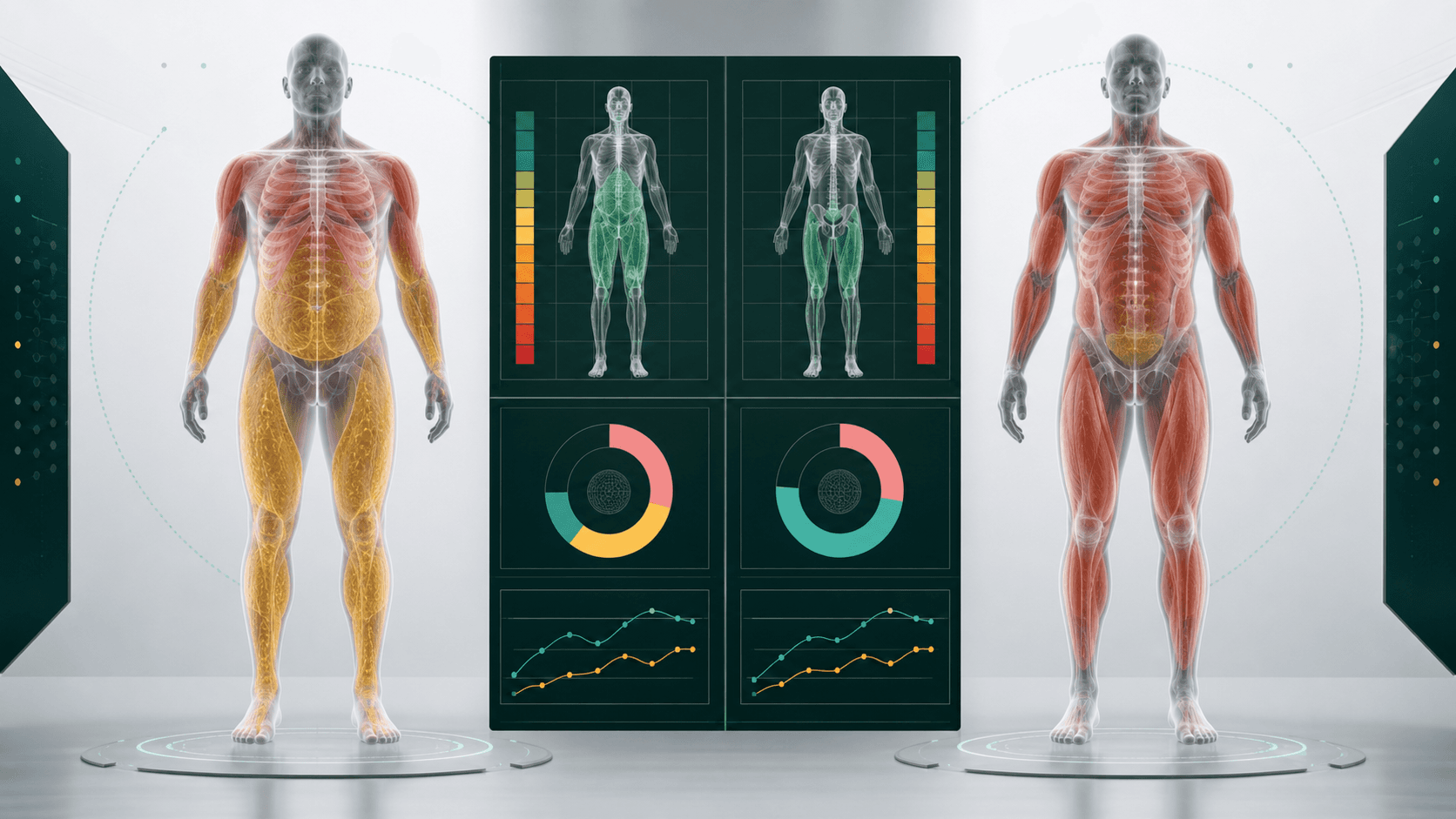
Most myostatin inhibitor before-and-after claims are stronger than the evidence. Real changes, when they happen, usually show up first in DXA, MRI, body-composition numbers, or disease-specific motor scales, not dramatic mirror photos.
Key takeaways
- Visible transformation photos are the weakest way to judge myostatin inhibition.
- Clinical drugs can change lean mass, fat mass, or motor scores, but results depend heavily on the drug, disease, population, and endpoint.
- ACE-083 increased measured muscle volume in a trial, but did not produce consistent functional improvements.
- Obesity trials with bimagrumab or trevogrumab are about lean-mass preservation and fat-loss quality, not bodybuilding-style before-and-after photos.
- Supplement and peptide before-and-after pages should be treated skeptically unless they show controlled human data and verified product identity.
Quick answer
A realistic myostatin inhibitor before and after is usually not a sudden comic-book transformation. Depending on the intervention, it may look like:
- slightly better preservation of lean mass during weight loss
- increased measured muscle volume in a targeted muscle
- improved disease-specific motor score in a clinical trial
- no meaningful visible change from a supplement
- a confusing photo result caused by training, diet, lighting, pump, body fat, or other drugs
The better question is not "what do the photos look like?" It is "what outcome was measured, in what population, with what product, compared with what control?"
What results are realistic by category?
| Category | Best-supported outcome | Typical timeline in studies | What before-and-after photos can miss |
|---|---|---|---|
| Training and nutrition | Strength, muscle size, body composition | 8-24+ weeks | The change is not proof of myostatin reduction |
| Supplements | Usually indirect support at best | Weeks to months | Lighting and training explain more than the label |
| Epicatechin/natural options | Early biomarker or pathway interest | Short studies, limited outcomes | Not proven to create dramatic visible gains |
| Peptides/research vials | Claims vary; human evidence is weak outside trials | Unknown for gray-market use | Product identity and safety are often unknown |
| Clinical myostatin-pathway drugs | Lean mass, fat mass, MRI volume, motor scales | 26-72 weeks depending on trial | Bigger measured muscle does not guarantee strength |
| Genetic low-myostatin states | High muscularity from development | Lifelong | Not comparable to adult supplementation |
For the broader evidence map, read myostatin inhibitors in humans and the best myostatin inhibitor ranking.
Why photos are a poor endpoint
Before-and-after photos are easy to manipulate without fake editing.
Lighting can sharpen muscle separation. A pump can change arm, shoulder, and chest appearance for an hour. Lower body fat can make the same muscle mass look larger. A different pose can change waist width and limb size. Creatine, glycogen, sodium, hydration, and camera distance all affect the result.
None of those prove myostatin inhibition.
A serious before-and-after should show at least one objective measure:
| Measure | What it tells you | Limit |
|---|---|---|
| DXA lean mass | Whole-body or regional lean mass | Includes water and organ mass, not only contractile muscle |
| MRI muscle volume | More specific regional muscle size | Expensive and usually trial-based |
| Fat mass and waist | Whether the visual change is mostly fat loss | Does not prove muscle gain |
| Strength tests | Practical performance | Training skill and neural adaptation matter |
| Motor scales | Disease-specific function | Not designed for healthy bodybuilding |
| Blood biomarkers | Possible mechanism signal | Does not prove visible results |
What clinical studies suggest
Clinical research shows that myostatin-pathway intervention can move body-composition or function endpoints. The results are specific, not universal.
Bimagrumab and semaglutide: better fat-loss quality
Bimagrumab is an investigational antibody targeting activin type II receptors. It is not a peptide supplement, and it is not approved as a bodybuilding drug.
In the 2026 BELIEVE phase 2 obesity trial, bimagrumab plus semaglutide produced greater fat-mass reduction and better lean-mass preservation than semaglutide alone. At week 72, the high-dose combination produced greater weight reduction than semaglutide 2.4 mg alone, with a much larger share of weight loss coming from fat mass. Bimagrumab alone produced a small increase in lean mass while reducing fat mass.
That is meaningful. It is also not the same as a before-and-after promise for a healthy lifter. The trial used clinical screening, drug-grade products, DXA measurements, and adverse-event tracking.
Trevogrumab combinations: preserving lean mass during weight loss
Regeneron reported phase 2 COURAGE results for semaglutide with trevogrumab, an anti-GDF8/anti-myostatin antibody, with or without garetosmab, an anti-activin A antibody.
In the 26-week analysis, semaglutide alone lost lean mass as part of total weight loss. Adding trevogrumab reduced that lean-mass loss, and the triplet group showed larger fat-mass reduction. These results are about the quality of weight loss, not a cosmetic hypertrophy protocol.
The practical translation is narrow: preserve more lean mass while losing fat under clinical supervision. That is very different from ordering a vial or supplement and expecting a transformation.
ACE-083: muscle volume without clear function
ACE-083 is one of the best cautionary examples. In a phase 2 trial in facioscapulohumeral muscular dystrophy, treated muscles increased in total muscle volume compared with placebo. The biceps group showed a 16.4% treatment difference and the tibialis anterior group showed a 9.5% treatment difference.
But the trial did not show consistent improvement in functional or patient-reported outcomes.
That is the before-and-after lesson: a scan can improve while daily function does not clearly change.
Apitegromab: motor function in SMA, not gym photos
Apitegromab is an investigational antibody that inhibits activation of myostatin by binding pro- and latent forms of the protein. In spinal muscular atrophy, the target is residual muscle weakness in people receiving SMN-targeted therapy.
Phase 2 TOPAZ follow-up reported sustained motor-function gains in nonambulatory SMA. Phase 3 SAPPHIRE met its primary endpoint, with a greater proportion of apitegromab-treated patients achieving clinically meaningful HFMSE improvements versus placebo.
That result is important, but it should not be reduced to "before and after muscle gain." It is disease-specific functional evidence.
What about peptide before-and-after results?
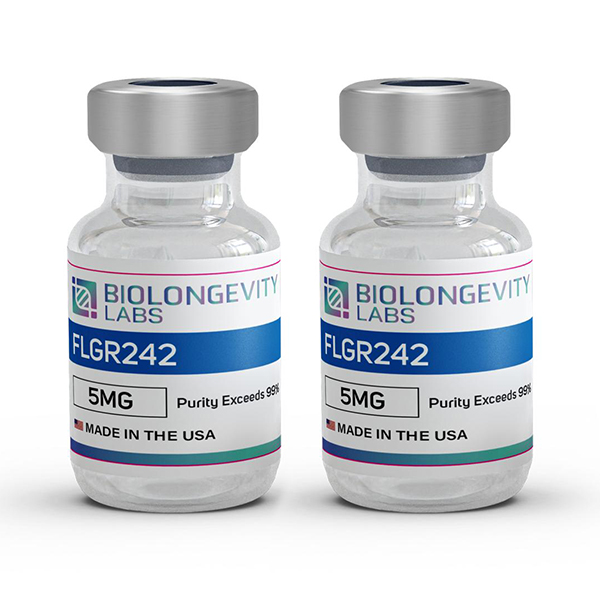
Peptide pages often show the most dramatic claims and the least reliable measurement.
Common problems include:
- The product may not be what the label says.
- The before-and-after may include anabolic steroids, SARMs, GLP-1 drugs, aggressive dieting, or training changes.
- The endpoint may be a pump photo, not muscle tissue.
- The page may borrow evidence from a different molecule or route.
- Dosing claims may be copied from animal studies or discontinued clinical programs.
For this category, read the dedicated myostatin inhibitor peptide guide. The short version: research is real, but consumer claims are often not clinically grounded.
What about supplement before-and-after results?
Most supplement before-and-after results should be assumed to come from the basics until proven otherwise.
If someone starts lifting harder, eats more protein, improves sleep, uses creatine, loses fat, and takes a "myostatin blocker" at the same time, the visible change cannot be credited to the myostatin label.
That does not mean every supplement is useless. It means the before-and-after claim is usually not specific enough.
For supplement details, see the myostatin inhibitor supplement review, natural myostatin inhibitors, and epicatechin and myostatin.
Realistic timelines
The timeline depends on what is being measured.
| Timeline | What may change | What not to assume |
|---|---|---|
| Days | Pump, water, glycogen, soreness | New contractile muscle from myostatin inhibition |
| 2-6 weeks | Training performance, body weight, early body-composition shifts | Reliable visible proof from supplements |
| 8-16 weeks | Some measurable hypertrophy from training; possible study biomarker shifts | Drug-like transformation from natural products |
| 26-52 weeks | Clinical trial endpoints such as lean mass, fat mass, MRI volume, motor scores | Same result in healthy unsupervised users |
| Lifelong | Genetic low-myostatin phenotype | Replicable adult outcome from a product |
If a page promises a visible myostatin inhibitor before and after in a few weeks, demand objective measurement.
Red flags in transformation claims
Be skeptical when a page uses these patterns:
- no baseline body weight, body fat, training history, or diet
- no DXA, MRI, circumference, or strength data
- different lighting, pose, distance, or pump status
- no disclosure of other drugs or supplements
- product name hidden behind a proprietary blend
- claims that a "research-use" vial is equivalent to a clinical drug
- borrowed evidence from unrelated molecules
- dosing or sourcing instructions for unapproved compounds
- no mention that myostatin is only one part of muscle growth
A credible page should make the result look less magical, not more.
The most honest before-and-after expectation
For healthy adults, the most reliable visible before-and-after still comes from training quality, protein consistency, energy balance, sleep, and enough time. Creatine can help many lifters perform better, but even that is not a direct myostatin transformation drug.
For patients in medical care, the relevant before-and-after depends on diagnosis. In obesity care, it may mean losing more fat while preserving more lean mass. In SMA, it may mean a motor-function score improvement. In muscular dystrophy research, it may mean a scan changes without a clear functional win.
Those are different outcomes. Treating them as the same is how hype spreads.
Summary
Myostatin inhibitor before-and-after results should be judged by objective endpoints, not transformation photos. Clinical data show that the pathway can matter, but they also show the limits: muscle volume may not become function, lean-mass preservation is not bodybuilding, and disease-specific gains do not validate consumer peptide use.
If the article or product page cannot separate photos, body composition, strength, function, safety, and regulatory status, it is not giving you enough information to trust the claim.
Sources and notes
- Bimagrumab plus semaglutide in obesity: randomized phase 2 BELIEVE trial
- Regeneron COURAGE phase 2 trevogrumab and semaglutide results
- Randomized phase 2 study of ACE-083 in facioscapulohumeral muscular dystrophy
- Long-term TOPAZ apitegromab results in spinal muscular atrophy
- SAPPHIRE apitegromab phase 3 publication summary
- Scholar Rock first quarter 2026 apitegromab regulatory update
- MDA update on ACE-031 clinical trials in Duchenne muscular dystrophy
Frequently Asked Questions
Do myostatin inhibitors produce dramatic before-and-after photos?
Not reliably. Clinical studies may show changes in lean mass, fat mass, MRI muscle volume, or motor scores, but dramatic cosmetic transformations are usually not supported by controlled evidence.
How fast would a real myostatin inhibitor work?
Clinical endpoints are usually measured over months, not days. Short-term visual changes are more likely from pump, water, glycogen, body fat, or training changes.
Are peptide before-and-after posts trustworthy?
Only if they disclose the exact product, testing, other drugs, training, diet, objective measurements, and adverse events. Most online posts do not meet that standard.
What is the best way to measure results?
Use objective measures such as DXA, MRI, waist, strength testing, performance measures, and consistent photos. No single measurement proves myostatin inhibition by itself.
This article is for educational purposes only and is not medical advice. Talk with a qualified healthcare professional before using supplements, peptides, biologics, or medications promoted for myostatin inhibition or muscle growth.