It is a brake-removing protein. Follistatin peptide products are sold on the premise that injecting a fragment of the natural follistatin molecule can block myostatin and unlock muscle the body otherwise holds back.
The mechanism is real. The translation from gene-therapy evidence to a vial of injectable peptide is the part most articles skip.
Key takeaways
- Follistatin peptide binds and neutralizes myostatin, activin A, and several BMPs at the receptor.
- Three versions circulate online: FST-344, FST-315, and FLGR242, a fragmented analog with an albumin binder.
- Recombinant follistatin has a ~90-minute plasma half-life, which is why most cycles use daily dosing.
- Strong human muscle data is gene-therapy data, not subcutaneous peptide data.
- Real biotech-grade recombinant follistatin runs above $4,500 per 1 mg, exposing the most underground pricing as suspect.
- Central serous chorioretinopathy was reported in 11 bodybuilders who used full 1 mg vials.
Follistatin peptide variants at a glance
Start with the menu. These are the three forms most readers run into when shopping or reading forums.
| Product | What it is | Where it acts | Practical note |
|---|---|---|---|
| FST-344 | 344-amino-acid precursor cleaved into FS-315 and FS-288 in vivo | Becomes both systemic and tissue forms | Default underground product, daily dosing typical |
| FST-315 | Mature circulating isoform without the heparin-binding tail | Systemic myostatin and activin neutralization | Sold less often, similar protocol style |
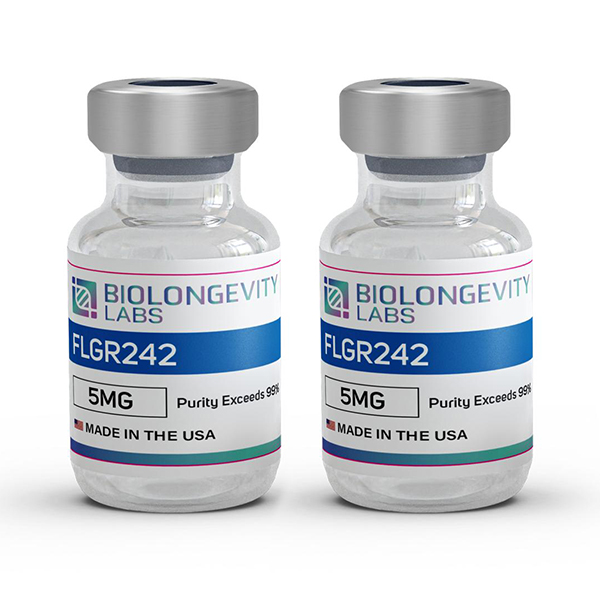
| FLGR242 | Fragmented, modified FST-344 analog with a patented albumin binder | Designed for longer half-life and weaker activin binding | Marketed by some research-supply labs for "muscle-only" effects |
| FS-288 | Heparan-sulfate-bound tissue form | Local muscle and reproductive tissue effects | Rarely sold directly, biology lives mostly inside cells |
For the pure pathway picture, read what follistatin is. For the dosing math, see follistatin dosage.
How the peptide actually works
The mechanism is well mapped. Myostatin (GDF-8) and activin A signal through ActRIIB receptors on muscle cells to slow satellite cell proliferation and limit fiber size.
Follistatin binds those ligands directly. It is not a receptor antagonist that competes at the site; it sequesters myostatin and activin before they can engage the receptor.
That has three practical consequences:
- Satellite cells get released to proliferate and fuse with existing fibers, adding nuclei.
- Activin-driven catabolic signaling drops, which can preserve muscle in disease states.
- Other follistatin targets (FSH release, BMP signaling, brown adipose biology) are affected too, which is why side-effect profiles are not muscle-only.
For the antibody-based version of the same blocking strategy, see anti-myostatin antibody.
Why gene therapy outperforms injection on paper
This is the single biggest gap in vendor marketing. Most of the dramatic human and primate data uses adeno-associated virus to deliver the FST-344 gene directly into muscle, where the cells themselves produce follistatin continuously for years.
Mendell's AAV1.CMV.FS344 trial in Becker muscular dystrophy used 3 to 6 × 10^11 vector genomes per kilogram per leg in one administration. Tissue follistatin levels exceeded 20 ng per mg of muscle protein 15 months later, and four of six patients gained between 29 and 125 meters on the six-minute walk test.
Macaque work earlier delivered 1 × 10^13 total vector genomes and produced about a 15% quadriceps circumference increase that held out past 60 weeks.
An injected peptide cannot replicate that. With a 90-minute plasma half-life and rapid liver clearance, exogenous follistatin peptide gives short, spiky exposure rather than sustained tissue expression. Community dosing of 100 to 200 mcg per day is borrowed math, not a validated equivalent.
The half-life problem
Short half-life shapes every protocol. Recombinant follistatin clears from plasma in about 90 minutes, partly because the liver pulls it down quickly.
That is why most underground protocols use:
- Daily or twice-daily subcutaneous injections
- Cycles only 10 to 30 days long
- Higher per-dose amounts than disease-state gene-therapy expression
- Long off periods to let satellite-cell adaptation finish
FLGR242 was designed to fight this clearance. Its albumin-binder linker is meant to extend circulating half-life, and the modification to its activin-binding domain is intended to keep muscle effects while reducing reproductive disruption. Independent human pharmacokinetic data on FLGR242 is not published as of 2026, so claims around it should be treated as vendor claims, not clinical evidence.
What results look like in real users
Realistic, not transformational. Forum users running 100 to 200 mcg per day for 20 to 30 days commonly report:
- Modest strength gains on key lifts
- Improved muscle fullness during the cycle
- 2 to 5 pounds of likely lean mass added when training volume is also high
- Connective-tissue stiffness or pump sensations
- Slow tapering of cosmetic gains during the off period without continued training
Older posts claiming 17 to 25 pounds in three weeks were typically stacked with anabolic steroids, GH secretagogues, or large caloric increases. They are not credible baseline expectations.
For more measured expectations, see follistatin before and after and myostatin inhibitor before and after.
Side effects and safety signals
Three signals deserve attention.
Eyes. A 2020 case series documented 11 male bodybuilders who developed central serous chorioretinopathy after subcutaneous follistatin-344 injections. All had used full 1 mg vials at once, about ten times typical protocols. Symptoms resolved over two to three months.
FSH and fertility. Follistatin was named for its ability to suppress follicle-stimulating hormone. Sustained myostatin and activin inhibition can lower FSH significantly, with theoretical effects on sperm production and the menstrual cycle.
Cardiac and metabolic biology. Myostatin regulates cardiac energy homeostasis in mouse work, and large prospective human studies link high chronic circulating follistatin to type 2 diabetes risk and cardiovascular events. The mechanism is not the same as injection peaks, but it is a real signal against pushing levels up indefinitely.
For more depth, see follistatin side effects and the broader are myostatin inhibitors legal write-up.
Sourcing red flags
Pricing tells the truth fast. A 1 mg vial of pharmaceutical-grade recombinant human follistatin from a biotech supplier costs more than $4,500. A vendor selling "1 mg follistatin 344" for $80 is selling something else, something less pure, or something underdosed.
Trust checks that should pass before purchase:
- Independent HPLC purity above 98% with a real chromatogram
- LC-MS molecular identity confirmation, not a generic certificate template
- Clear isoform labeling (FST-344, FST-315, or FLGR242), not just "follistatin"
- Transparent lot numbers and storage conditions
- Sequence listed on the COA so you can compare against UniProt P19883
- Pricing that respects the underlying production cost
Independent third-party testing programs have repeatedly found vials sold as follistatin containing MGF, GHRP-2, or nothing identifiable at all. The peptide name on the label is not a guarantee of contents. See where to buy follistatin for vendor-side detail.
Who should consider it, and who should not
Follistatin peptide fits a narrow audience. The honest defensible profile:
- Advanced lifters already optimizing training, protein, sleep, and creatine
- Adults aware of the legal and athletic-testing landscape (WADA S4)
- People with no history of retinopathy, fertility concerns, or cardiac disease
- Anyone willing to pay for tested material rather than the cheapest vial
Poor fits include beginners still gaining on standard programming, people of reproductive age planning a family soon, anyone with diabetes or kidney disease, and any tested athlete. For broader options, read best myostatin inhibitor and natural myostatin inhibitor.
Sources and notes
- Follistatin 344 Peptide — Jay Campbell
- Follistatin (FLGR242) — BioLongevity Labs
- Follistatin: A Myostatin-Inhibiting Glycoprotein — Superpower
- Follistatin Peptide: What the Research Actually Shows — Peptibase
- Follistatin — Wikipedia
- Phase 1/2a follistatin gene therapy in Becker muscular dystrophy
- Follistatin gene delivery enhances muscle growth in nonhuman primates
- Central serous chorioretinopathy associated with high-dose follistatin-344
Frequently Asked Questions
Does follistatin peptide really build muscle?
The mechanism is real and the gene-therapy evidence is meaningful. Subcutaneous peptide cycles produce smaller, less consistent results, typically 2 to 5 pounds of probable lean mass over a 30-day cycle paired with hard training.
What is the difference between FST-344, FST-315, and FLGR242?
FST-344 is the precursor your body cleaves into the others. FST-315 is the systemic adult form. FLGR242 is a fragmented, modified analog with an albumin binder designed for longer half-life and less activin disruption.
Is injectable follistatin peptide approved by the FDA?
No. No injectable follistatin product is approved for any indication. Gene therapy with AAV1-FS344 exists only in registered clinical trials.
Why is follistatin so expensive?
It is a fragile glycoprotein that has to be expressed and purified to high standards. Pharmaceutical-grade recombinant follistatin runs above $4,500 per 1 mg, which makes cheap underground pricing implausible.
What side effects matter most?
Central serous chorioretinopathy at high single doses, FSH suppression with possible fertility effects, theoretical cardiac concerns based on myostatin's role in heart biology, and injection-site reactions.
Should I pick the peptide or wait for gene therapy?
For most healthy adults, neither path is the obvious answer. Training, protein, creatine, and sleep deliver more reliable muscle for less money, and the gene-therapy pipeline is still investigational.
This article is for educational purposes only and is not medical advice. Talk with a qualified healthcare professional before considering follistatin peptide or any experimental therapy, especially if you have eye disease, fertility plans, cardiovascular history, diabetes, or take prescription medications.